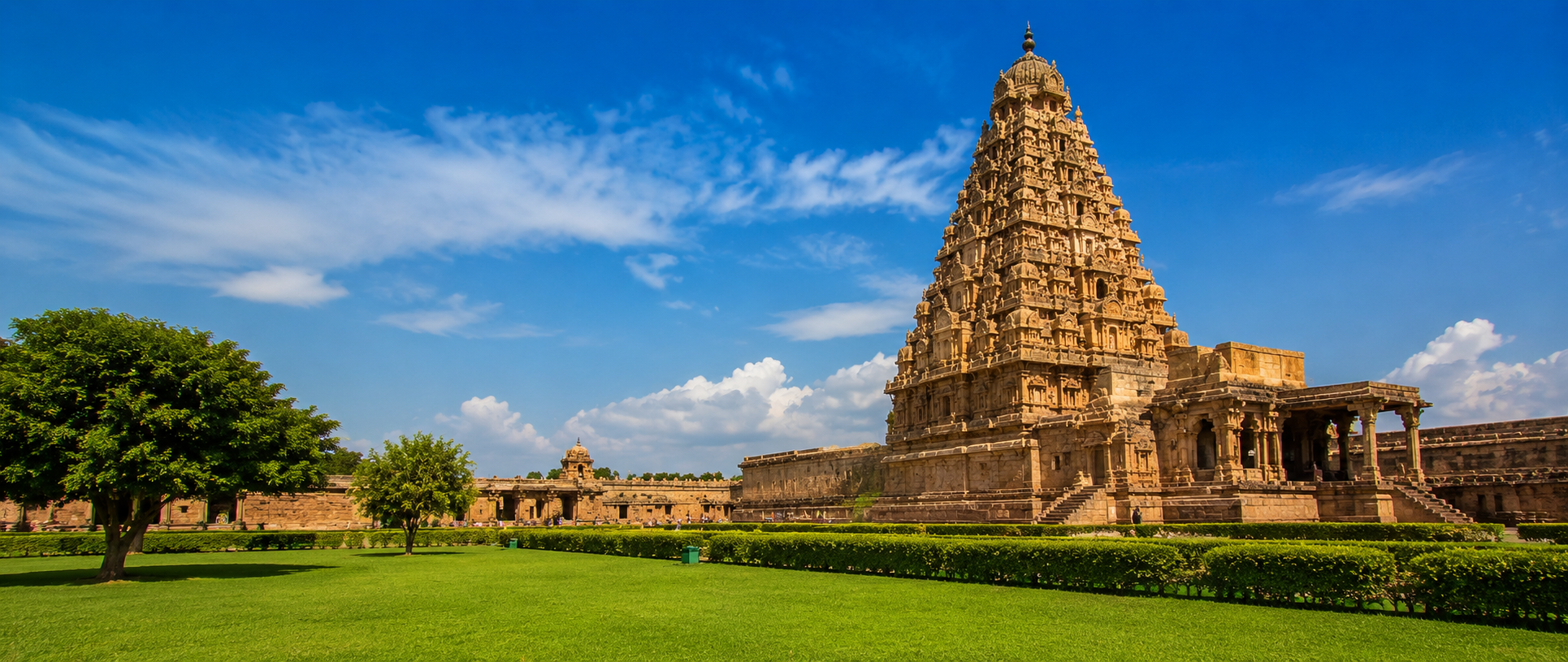
Mahabalipuram also known as Mamallapuram is one of the most extraordinary archaeological sites in India and one of the finest places anywhere in the world to encounter ancient monumental sculpture in its original natural setting. Located 58 km south of Chennai on the Tamil Nadu coast, this ancient port city was the main seaport of the Pallava dynasty, which ruled much of South India from the 4th to the 9th centuries CE. In those five centuries, the Pallavas inspired rulers who were simultaneously great warriors, theologians, and passionate patrons of art and architecture transformed the granite outcrops along the Mahabalipuram shore into one of the greatest open-air art museums in the world.
The monuments of Mahabalipuram are unlike anything else in India. They are not grand stone temples in the Dravidian tradition of the later Chola and Nayak periods they are something more intimate, more immediate, and in some ways more astonishing: rock-cut temples and cave temples carved directly from living granite; monolithic rathas (chariots) hewn from single boulders; and the magnificent Descent of the Ganges a bas-relief panel covering 27 metres of a natural rock face, the largest bas-relief in the world, depicting the entire cosmos gathered to witness the sacred river's descent from heaven. Walking among these monuments, with the Bay of Bengal crashing on the adjacent beach and the salt breeze carrying the sound of the waves across a landscape of 1,500-year-old carved stone, is one of the great aesthetic and historical experiences that India offers any traveller.
Mahabalipuram is also a pleasant beach town with an excellent stretch of coastline, a thriving stone-carving tradition (the descendants of the Pallava sculptors still work here), good restaurants, and easy road connections to Chennai and Pondicherry. It is the ideal two to three-day destination for heritage travellers, beach lovers, art enthusiasts, and anyone passing through Tamil Nadu who wants an encounter with the ancient and the beautiful.
At Vayable Trip, our Mahabalipuram tour packages give you the complete experience of this extraordinary destination the UNESCO monuments, the sculpture traditions, the beachside character, and the nearby heritage sites that make this stretch of the Tamil Nadu coast one of the richest in the country.
Our Popular Mahabalipuram Tour Packages
Mahabalipuram Day Trip Package (from Chennai)
The perfect day excursion from Chennai a full day of expert-guided exploration of the UNESCO World Heritage monuments of Mahabalipuram, returning to Chennai in the evening. Covers all the major sites including the Shore Temple, the Five Rathas, Descent of the Ganges, Arjuna's Penance, and the cave temples, with a comfortable private vehicle, expert heritage guide, all entry tickets, and a seafood lunch at a recommended beach restaurant.
Highlights: Shore Temple · Five Rathas · Descent of the Ganges · Arjuna's Penance · Pancha Pandava Mandapam · Mahishasuramardini Cave · Sculpture workshops Ideal for: Chennai-based travellers, day trippers, heritage enthusiasts
Classic Mahabalipuram Package – 1 Night / 2 Days
An overnight package giving you the full Mahabalipuram heritage experience without rushing including the magical experience of the Shore Temple at both sunrise and sunset, a leisurely guided walk through all the UNESCO monument groups, time at the beach, a visit to a working sculpture workshop, and an evening seafood dinner at a beach restaurant. 3-star beachside accommodation and daily breakfast.
Highlights: Shore Temple sunrise and sunset · Five Rathas · Descent of the Ganges · Cave temples circuit · Mahishasuramardini Cave · Sculpture workshop visit · Mahabalipuram beach · Tiger Cave Ideal for: Heritage travellers, art enthusiasts, couples on a beach-heritage break
Mahabalipuram + Pondicherry Package – 3 Nights / 4 Days
One of our most popular South India packages combining the ancient Pallava heritage of Mahabalipuram with the charming Franco-Tamil colonial character of Pondicherry (98 km further south). A beautifully contrasting journey from the greatest open-air museum in ancient India to the fine French Quarter cafes, the Sri Aurobindo Ashram, and the white-sand beaches of the Coromandel Coast.
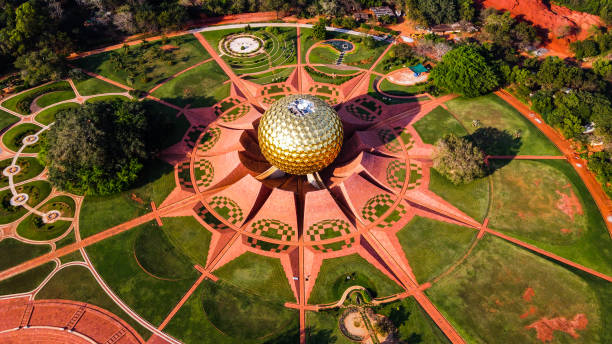
Highlights: Complete Mahabalipuram UNESCO circuit · Sculpture workshop · Mahabalipuram beach · French Quarter heritage walk in Pondicherry · Sri Aurobindo Ashram · Auroville · Paradise Beach · Promenade sunset Ideal for: Couples, cultural travellers, Chennai-based holiday seekers
Mahabalipuram + Kanchipuram Package – 2 Nights / 3 Days
Combining two of Tamil Nadu's greatest heritage destinations the Pallava rock-cut monuments of Mahabalipuram and the ancient temple city of Kanchipuram, 72 km to the northwest, one of the seven sacred cities of Hinduism and the finest centre of Dravidian temple architecture in Tamil Nadu. Together, they tell the complete story of the Pallava dynasty and its extraordinary architectural legacy.
Highlights: Full Mahabalipuram UNESCO monument circuit · Shore Temple · Five Rathas · Descent of the Ganges · Kanchipuram Kailasanatha Temple · Ekambaranatha Temple · Kamakshi Amman Temple · Kanchipuram silk weaving Ideal for: Heritage travellers, architecture enthusiasts, temple circuit visitors
Premium Mahabalipuram Heritage Package – 2 Nights / 3 Days
The finest Mahabalipuram experience luxury boutique hotel accommodation (seafacing where available), specialist art historian guide with deep expertise in Pallava sculpture and iconography, private early morning access to the Shore Temple complex before general visitor hours, a hands-on session with a master stone sculptor learning the ancient Mahabalipuram carving tradition, a curated beach dinner, and a sunset photography session at the Five Rathas.
Highlights: Luxury boutique stay · Specialist art historian guide · Private early Shore Temple access · Master sculptor workshop session · Sunset photography at Five Rathas · Curated beach dinner · Tiger Cave excursion Ideal for: Luxury travellers, art connoisseurs, photography enthusiasts, serious heritage explorers
Why Book Your Mahabalipuram Tour with Vayable Trip?
Mahabalipuram's monuments repay expert guidance richly. The iconographic programmes of the cave temples, the narrative of the Descent of the Ganges (which is interpreted in two competing and equally fascinating ways by different scholars), the architectural evolution from rock-cut to structural temple visible across the site all of these are experiences that are transformed by a knowledgeable guide. Our Mahabalipuram guides are trained in Pallava art history and temple iconography, and their interpretation of these monuments gives every visitor a depth of understanding that independent exploration cannot approach.
Top Attractions in Mahabalipuram
Shore Temple (UNESCO World Heritage Site)
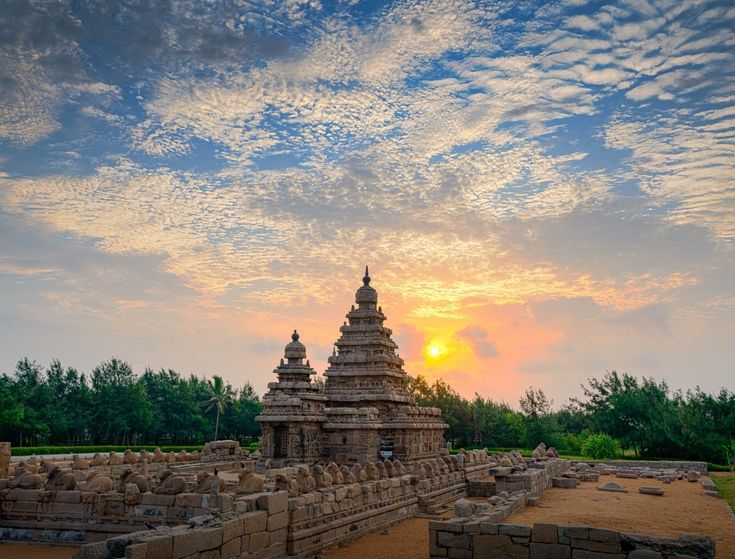
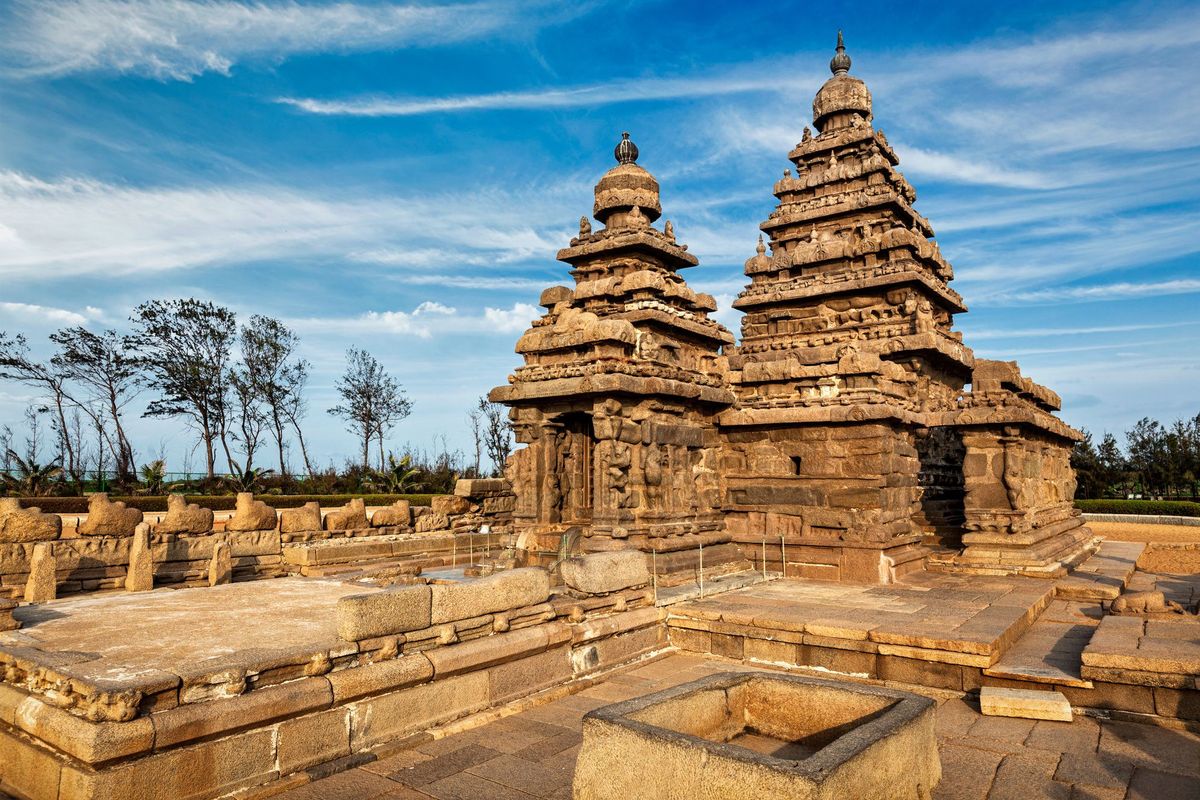
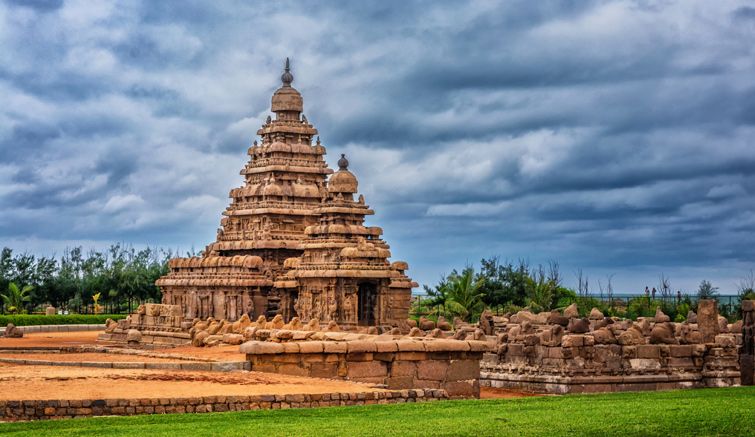
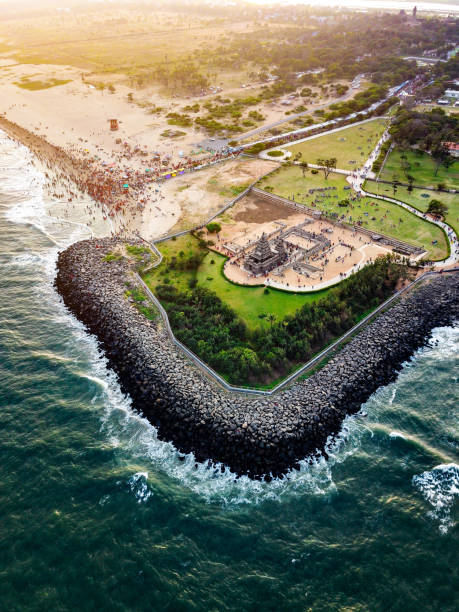
The Shore Temple is Mahabalipuram's most iconic monument and one of the finest surviving examples of Pallava architecture in India. Built in the 8th century CE by Pallava King Rajasimha (Narasimhavarman II), the temple comprises three shrines two dedicated to Shiva and one to Vishnu arranged in an elegant ensemble at the very edge of the Bay of Bengal. The main shikhara, rising in a stack of diminishing tiers, was the first free-standing stone temple to be built in South India a revolutionary departure from the rock-cut tradition and the prototype for the structural Dravidian temple architecture that would dominate South India for the next thousand years.
The shore setting gives the temple its extraordinary character — the constant sound and movement of the sea surrounds the ancient stone, the salt spray has weathered the carvings over centuries into a softened, almost geological beauty, and the light at sunrise and sunset transforms the temple from a heritage monument into something approaching a natural phenomenon. The temple is at its most magnificent in the early morning, when the first light catches the weathered stone in gold and rose against the dark sea. Our packages always include a sunrise Shore Temple visit.
Descent of the Ganges (Arjuna's Penance)
The greatest bas-relief in the world and one of the finest individual works of art in Indian history, the Descent of the Ganges is a 27-metre wide, 9-metre high panel carved on two massive granite boulders at the centre of the Mahabalipuram monument complex. The relief depicts the entire cosmos assembled to witness the descent of the sacred Ganges River from heaven to earth gods and goddesses, celestial beings, humans, animals, nagas (serpent deities), and the great figures of Hindu mythology are depicted in a swirling, densely populated composition of extraordinary dynamism and narrative complexity. A natural cleft between the two boulders represents the river itself, and in the original design, water flowed through this cleft into a tank below bringing the carved river to life.
The relief is also known as Arjuna's Penance, reflecting an alternative interpretation that identifies the central ascetic figure as the Pandava hero Arjuna performing tapas to obtain Shiva's weapon. Both interpretations are fascinating, and both are explained by our guides in the context of the full iconographic programme. The scale of the work, the quality of the individual figures (the elephants, the nagas, the celestial musicians) and the unity of the overall composition make this one of the supreme achievements of ancient Indian sculpture.
Five Rathas (Pancha Pandava Rathas)
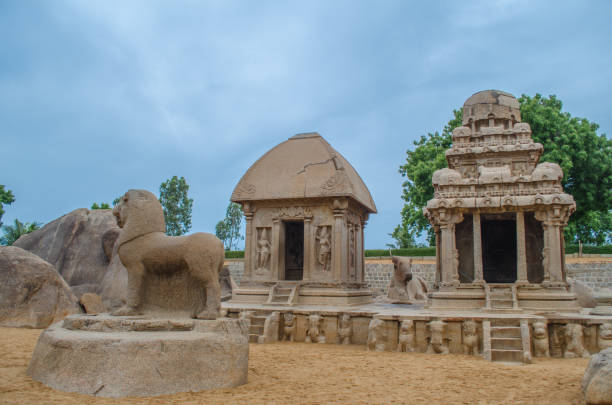
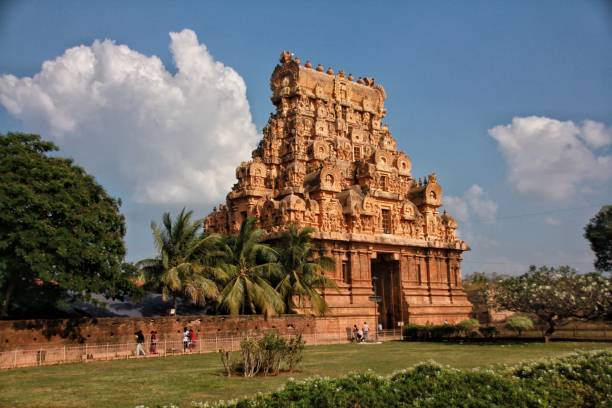
Five monolithic temples hewn from single granite boulders at the southern end of the Mahabalipuram monument complex, the Pancha Pandava Rathas (named after the five Pandava brothers and Draupadi from the Mahabharata, though the association is purely legendary) represent the full range of early Dravidian architectural styles developed under the Pallavas. Each ratha is different in plan and elevation, and together they constitute a textbook of Pallava architectural experimentation the Dharmaraja Ratha with its three-tiered shikhara, the apsidal Bhima Ratha, the elegant Arjuna Ratha (considered the prototype of the mature Dravidian style), and the smaller Nakula-Sahadeva Ratha and Draupadi Ratha. The adjacent sculptures of a magnificent elephant and Nandi (Shiva's bull) are among the finest free-standing sculptures from the Pallava period.
Cave Temples
Mahabalipuram has eight rock-cut cave temples, each a masterpiece of the early Pallava phase when the tradition of carving shrines and sculpture directly from living granite was at its most inventive and most technically accomplished. The most significant include:
Mahishasuramardini Cave: Containing the finest sculptural panel in Mahabalipuram the goddess Durga riding her lion into battle against the buffalo-demon Mahisha, carved with a dynamism and energy that no photograph captures adequately. The opposing panel of Vishnu reclining on Ananta (the cosmic serpent) is equally magnificent.
Varaha Cave: Four magnificent large relief panels depicting Vishnu in his boar (Varaha) and dwarf (Trivikrama) forms, with the celestial Ganga and Yamuna river goddesses at the entrance columns.
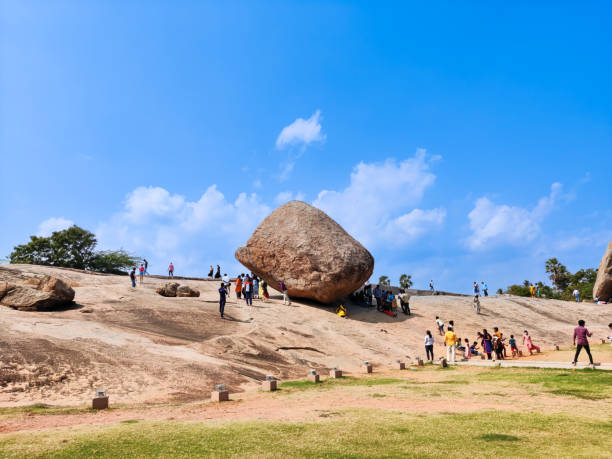
Krishna's Butter Ball A massive, egg-shaped granite boulder perched on a smooth rock slope at an angle that defies gravity barely touching the slope below Krishna's Butter Ball is one of the most photographed natural curiosities in India and a favourite subject of the question "how is this possible?" (The answer involves the precise geometry of the contact point and the high friction coefficient of the rock.) The British attempted to move it with seven elephants and failed; today it sits exactly as it has for thousands of years, tilted but immovable.
Sculpture Workshop & Living Craft Tradition
The stone-carving tradition of Mahabalipuram has been continuous since the Pallava period the ancient skills of the original carvers were passed down through generations and today the town's sculptors produce work that continues the ancient iconographic and technical traditions while also engaging with contemporary markets. A visit to one of the established sculpture workshops watching carvers at work on granite and marble figures using tools and techniques that have not fundamentally changed in 1,500 years is one of Mahabalipuram's most distinctive and most memorable experiences. Our guides take visitors to genuine working ateliers, not tourist showrooms.
Tiger Cave
About 4 km north of the main monument complex, Tiger Cave is a rock-cut outdoor theatre from the Pallava period a semi-circular rock face carved with a series of large, fierce tiger and yali (mythical lion) heads arranged around a central stage area. The purpose of the structure is believed to have been open-air dramatic or dance performances. The setting, on a rocky outcrop above the beach, is beautiful and the carving of the animal heads is powerful and technically accomplished.
Best Time to Visit Mahabalipuram
November to February: The finest season. The northeast monsoon has passed, leaving clear skies, mild temperatures (22°C to 30°C), and calm seas. The beach is at its best, the monument photography is excellent in the clear winter light, and the morning and evening light on the Shore Temple and Descent of the Ganges is extraordinary. Strongly recommended.
March to May: Good conditions before the pre-monsoon heat arrives. The sea remains calm until April. The tourist crowds are thinner than November–February.
Monsoon (October–November): The northeast monsoon brings heavy rainfall to this coast Mahabalipuram is on the Coromandel Coast, which is significantly affected by the northeast monsoon (unlike the west coast). October and November can see heavy rain and rough seas.
December: The International Mahabalipuram Dance Festival, held annually in December/January against the backdrop of the Shore Temple, is one of the finest classical dance events in South India Bharatanatyam, Odissi, Kathak, and Kuchipudi are performed by leading artists on an open-air stage with the illuminated Shore Temple as the backdrop.
Package Inclusions Across All Tiers
- Accommodation: As per package 3-star beach hotels to 4-star boutique properties, all within comfortable distance of the monument complex
- Meals: Daily breakfast; seafood lunch recommendation at Mahabalipuram's beach restaurants; curated dinner in Premium package
- Transportation: Pickup from Chennai Airport, Central Railway Station, or Egmore Station; all local sightseeing by private vehicle
- Expert Heritage Guide: Specialist guide with Pallava art history knowledge essential for the full Mahabalipuram experience
- Entry Tickets: All ASI monument entry tickets included (Shore Temple, Five Rathas, Descent of the Ganges complex)
- Sculpture Workshop: Guided visit to a genuine working atelier included in all overnight packages
- Timing: Shore Temple sunrise visit included in all overnight packages
- 24/7 Support: Our team is always reachable
Optional Add-ons:
- Mahabalipuram Dance Festival attendance (December/January)
- Kanchipuram silk weaving and temple day excursion
- Pondicherry extension
- Night photography session at the Shore Temple (special permit arrangement)
- Snorkelling at Mahabalipuram beach
Practical Travel Information
How to Reach Mahabalipuram:
- By Road: Mahabalipuram is 58 km from Chennai on the East Coast Road (ECR) a scenic coastal drive of approximately 1.5 hours. The ECR itself is a beautiful coastal highway worth experiencing.
- By Bus: Regular TNSTC bus services from Chennai Mofussil Bus Terminus (CMBT) to Mahabalipuram.
- By Air: Chennai International Airport (68 km, approximately 1.5–2 hours via ECR or inner roads).
Local Tips:
- Arrive at the Shore Temple by 6 AM for the sunrise the monument opens early and the first 30 minutes in the morning light, before the tour groups arrive, are genuinely magical.
- Wear comfortable walking footwear the monument complex involves walking on granite boulders and uneven terrain.
- The afternoon (2–5 PM) is the hottest and least pleasant time for outdoor monument visits structure your day with early morning monuments, midday beach or indoor time, and late afternoon/sunset monuments.
- The seafood restaurants along the Mahabalipuram beach road particularly the grilled fresh fish and prawn thalis are excellent and very reasonably priced.
- Sculpture purchases: buy directly from the sculptor's workshop rather than from street vendors near the monuments for genuine quality and honest pricing.
Discover Mahabalipuram with Vayable Trip
Step into the fascinating world of ancient architecture, coastal beauty, and rich Tamil heritage with Vayable Trip’s customised Mahabalipuram tour packages. Explore the magnificent Shore Temple, marvel at the intricate rock-cut monuments, and discover the legendary Pancha Rathas and Arjuna’s Penance. Whether you’re planning a family holiday, a weekend getaway, a heritage trip, or a Chennai–Mahabalipuram tour, our packages can be customised to match your interests, budget, and travel plans. Let Vayable Trip take care of your travel arrangements, accommodation, sightseeing, and transportation while you enjoy a hassle-free journey.
Plan your Mahabalipuram trip with Vayable Trip today and experience the timeless beauty of Tamil Nadu’s iconic coastal heritage. Get in touch with our travel experts to customise your perfect holiday.