Tamil Nadu is one of India’s most culturally layered and visually diverse states a land where ancient temple cities, UNESCO monuments, mist-covered hill stations, sacred pilgrimage towns, colonial heritage, classical arts, and long coastal landscapes coexist within a single journey. From the towering gopurams of Madurai and Thanjavur to the tea gardens of Ooty and Coonoor, every region of the state offers a completely different atmosphere and experience. Our carefully curated Tamil Nadu tour packages are designed to help travellers experience this diversity through heritage circuits, spiritual journeys, hill station escapes, coastal retreats, food trails, and immersive cultural experiences that reveal the real soul of South India.
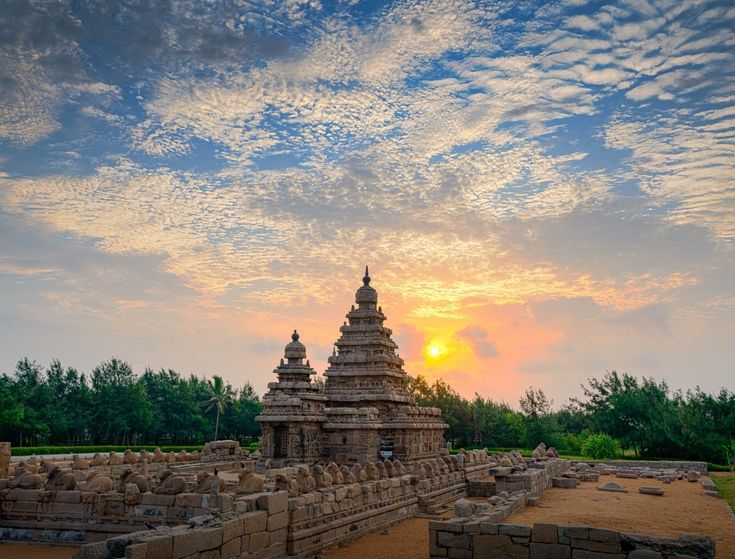
What makes Tamil Nadu extraordinary is not just the number of places to visit, but the depth of history and living tradition that exists within them. This is the homeland of the Chola Empire, Bharatanatyam dance, Carnatic music, Dravidian temple architecture, and some of the oldest continuously functioning temples in the world. Whether it is witnessing sunrise at the Shore Temple in Mahabalipuram, walking through the thousand-pillared corridors of Rameswaram, exploring Chettinad mansions, or riding the Nilgiri Mountain Railway through tea-covered hills, Tamil Nadu rewards travellers who seek experiences that are both meaningful and unforgettable.
At Vayable Trip, we design Tamil Nadu journeys that go beyond standard sightseeing. Our itineraries combine carefully selected hotels, local cultural insight, comfortable transport, authentic food experiences, and destination-specific planning that helps travellers experience each region at the right pace.
Explore our Top Tamil Nadu Tour Packages
1. Chennai Mahabalipuram Pondicherry Tour Package
Coastal heritage circuit with temples, beaches, colonial architecture, and cultural experiences.
2. Madurai Rameswaram Kanyakumari Tour Package
Tamil Nadu’s most famous pilgrimage and spiritual travel route.
3. Ooty Coonoor Kodaikanal Hill Station Package
Tea gardens, toy train rides, waterfalls, viewpoints, and mountain retreats.
4. Thanjavur Trichy Chidambaram Heritage Tour
UNESCO temples, Chola architecture, and South India’s finest heritage circuit.
5. Chettinad Culinary & Heritage Tour
Mansion stays, authentic Chettinad cuisine, village experiences, and cultural exploration.
6. Wildlife & Nature Tour of Tamil Nadu
Mudumalai, Valparai, Anamalai Tiger Reserve, waterfalls, and forest stays.
7. Tamil Nadu Honeymoon Packages
Romantic hill stations, beach sunsets, plantation resorts, and scenic road trips.
8. Temple Tour Packages in Tamil Nadu
Navagraha temples, Shiva temples, Murugan temples, and sacred pilgrimage circuits.
Tamil Nadu Temple Circuit- The Great Dravidian Heritage
Tamil Nadu has more ancient temples than any other state in India with over 33,000 temples recorded across the state, including some of the most historically and architecturally significant sacred sites in the world. The state’s temple tradition spans nearly 1,500 years of continuous Dravidian architecture from the Pallava and Chola periods to the Nayak and Vijayanagara dynasties. The UNESCO-listed Great Living Chola Temples at Thanjavur, Gangaikondacholapuram, and Darasuram, along with the monuments of Mahabalipuram and the sacred temple cities of Madurai, Chidambaram, Kanchipuram, and Srirangam, together form one of the greatest cultural and spiritual journeys in India. A complete Tamil Nadu temple circuit combines architecture, mythology, sculpture, music, ritual, and living traditions in a way unmatched anywhere else in South Asia.
Our Tamil Nadu Temple Circuit packages are designed for travellers who want to experience these sacred sites properly rather than rushing through them. We create carefully paced itineraries covering temple towns, UNESCO monuments, pilgrimage routes, heritage walks, and cultural experiences across Tamil Nadu. From dawn rituals at Meenakshi Temple and evening Deeparadhana at Chidambaram to the massive corridors of Rameswaram and the towering vimana of Brihadeeshwara Temple, every destination reveals a different chapter of Tamil civilisation and Dravidian heritage.
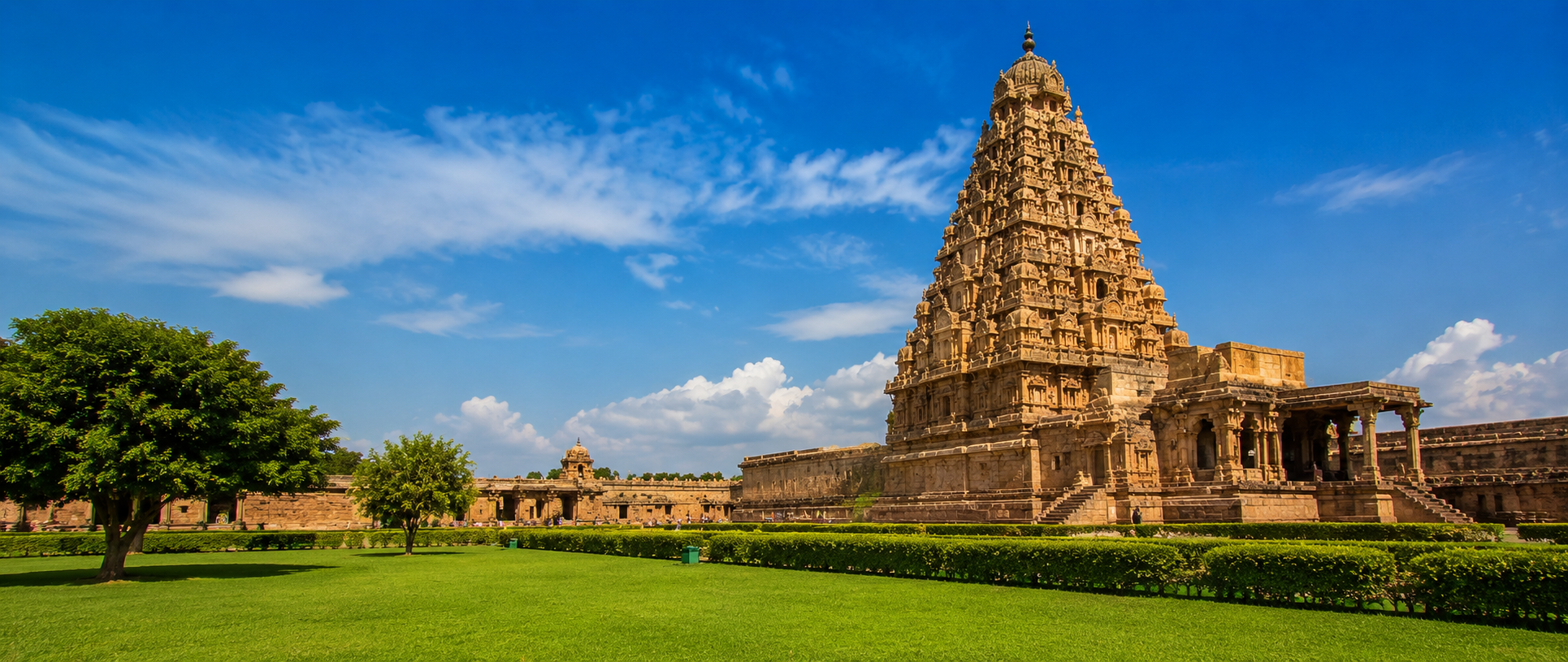
1. Brihadeeshwara Temple Thanjavur (UNESCO)- The 1010 CE Chola masterpiece famous for its massive vimana, frescoes, Nandi mandapa, and bronze gallery.
2. Nataraja Temple Chidambaram- Tamil Nadu’s most sacred Nataraja shrine dedicated to Shiva as the Cosmic Dancer.
3. Meenakshi Amman Temple Madurai- The multi-gopuram temple complex representing the peak of Nayak-period Dravidian architecture.
4. Kanchipuram Temple Circuit- Explore the Kailasanatha Temple, Ekambareswarar Temple, and the ancient temple city known for its 100+ historic shrines.
5. Kumbakonam Temple Cluster- Sacred temple town famous for Adi Kumbeswarar Temple, Sarangapani Temple, and the Mahamaham festival tank.
6. Srirangam Ranganathaswamy Temple- The world’s largest functioning Hindu temple complex spread across 156 acres with 21 gopurams.
7. Mahabalipuram UNESCO Monuments- Pallava-era Shore Temple, Pancha Rathas, cave temples, and the famous Arjuna’s Penance bas-relief.
8. Ramanathaswamy Temple Rameswaram- One of Hinduism’s holiest pilgrimage sites with the longest temple corridor in Asia and the sacred 22 theerthams.
What’s Included in Our Tamil Nadu Tour Packages
- Comfortable hotel accommodation across all destinations.
- Daily breakfast and selected meal inclusions.
- Private cab and intercity transportation.
- Airport and railway station pickup/drop services.
- Guided sightseeing tours and local experiences.
- Temple visits, heritage walks, and cultural activities.
- Tea estate tours, wildlife safaris, and adventure activities (depending on package).
- Experienced drivers and on-trip travel assistance.
- Customizable itineraries based on budget and travel style.
- Support for couples, families, groups, solo travellers, and corporate trips.
Top Destinations in Our Tamil Nadu Holiday Tour Packages
1. Chennai- The Gateway to the South
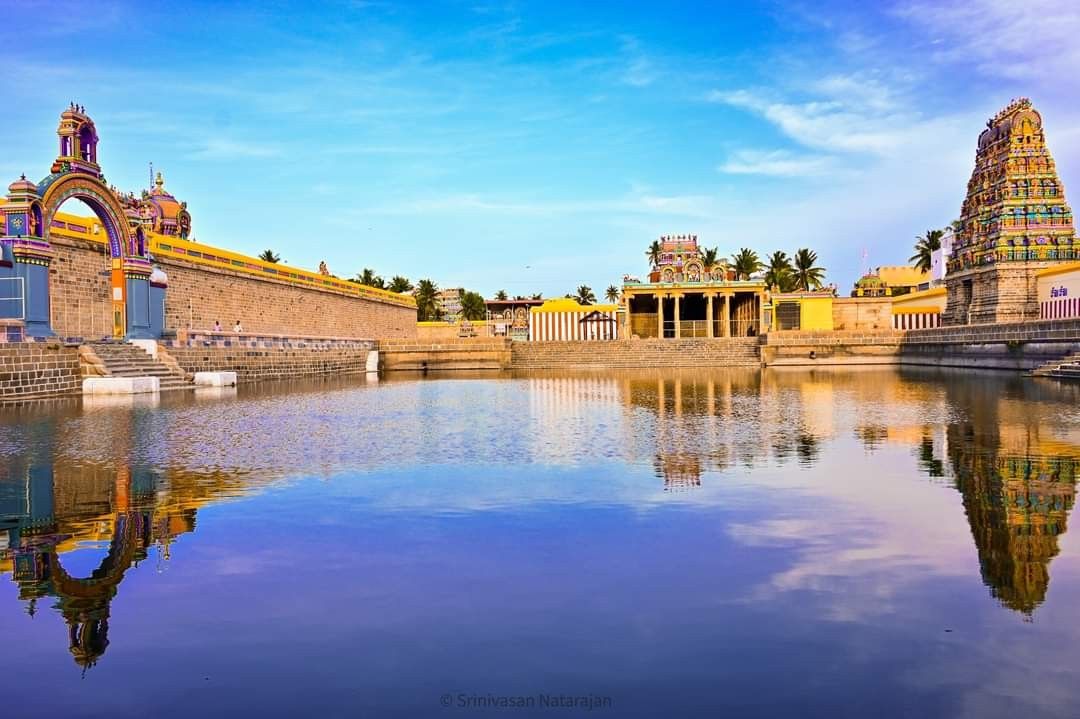
Chennai is the cultural capital of South India and the gateway through which most visitors to Tamil Nadu arrive a city of 10 million people on the Coromandel Coast that contains the most significant Dravidian cultural institutions in the country: the Kalakshetra Foundation (the finest school of Bharatanatyam dance), the Music Academy (the home of the Carnatic music season), the Government Museum (the finest collection of South Indian bronzes outside the Chola heartland), and the Kapaleeshwarar Temple in Mylapore (one of the most atmospheric urban temples in Tamil Nadu). Chennai's Marina Beach stretching 13 kilometres from the Lighthouse to Besant Nagar is the longest urban beach in India and the second longest in the world, and the evening culture of the beach (the corn carts, the horse rides, the kite flyers, and the families) is as specific to Chennai as the Ganga Aarti is to Varanasi. The Mylapore neighbourhood the oldest continuously inhabited area of the city, with its temple tank, its Brahmin cooking tradition, its silk sari shops, and its filter coffee culture is where Chennai's soul is most clearly legible.
Best Time to Visit- November to February (finest weather, Music Season in December) • December (Carnatic Music Season the most significant classical music festival in South India) • avoid April to June (extreme heat and humidity).
Places to Visit- Marina Beach • Kapaleeshwarar Temple • Government Museum • San Thome Cathedral • Fort St. George • Mylapore • Kalakshetra • Valluvar Kottam • Mahabalipuram (60 km).
What to Eat- Filter Coffee • Idli, Dosa, Vada with multiple chutneys and sambar • Chettinad Chicken Curry at Ponnusamy or Anjappar • Sundal • Murukku and Thattai • Kothu Parotta.
Top Things to Do
• Kapaleeshwarar Temple at dawn (Mylapore)- the 7th-century Shiva temple at first light before the morning rush; the temple tank reflection and the gopuram detail.
• Government Museum Bronze Gallery- the finest collection of Chola bronzes outside Thanjavur; the Nataraja and the Uma-Maheshwara.
• Marina Beach evening- the 13-km beach at sunset with the corn carts, the kite flyers, and the city visible at both ends; an absolutely specific Chennai experience.
• Carnatic Music Season (December)- over 2,000 concerts in a month; we design a curated 3-day music itinerary for travellers visiting in December.
• Kalakshetra Foundation- the finest Bharatanatyam school in the world; campus tours are available and occasional performances are open to the public.
• Mylapore breakfast circuit- filter coffee at Murugan Idli Shop, the Brahmin's Coffee Bar, and the old restaurant on Luz Church Road.
2. Madurai- The Temple City That Never Sleeps
Madurai is the oldest continuously inhabited city in South India a 2,500-year history as a centre of Tamil culture, the Pandya kingdom's capital, and the home of Sangam poetry that shapes Tamil literary tradition to this day. The Meenakshi Amman Temple is the reason most visitors come: a 17-hectare complex of 14 gopurams (gateway towers), each covered with thousands of painted stucco figures in a riot of colour that intensifies at night when the towers are lit, surrounding an inner sanctum where the goddess Meenakshi (a fish-eyed form of Parvati) has been worshipped continuously for at least 2,000 years. The temple operates continuously there is no closing time, no off-season, and no quiet hour drawing 15,000 to 20,000 devotees daily in a river of devotion that flows through the corridors at every hour of the day and night. The Thirumalai Nayak Palace, built in 1636 by the Nayak ruler Thirumalai, is a Dravidian-Islamic fusion building of extraordinary scale whose dance hall could seat 5,000 people.
Best Time to Visit- October to March (comfortable temple-visiting weather) • April to May (Chithirai Festival the celestial wedding of Meenakshi and Sundareshvara, one of Tamil Nadu's greatest temple festivals) • avoid June to September (hot and humid)
Places to Visit- Meenakshi Amman Temple • Thirumalai Nayak Palace • Gandhi Museum • Vandiyur Mariamman Teppakulam • Alagar Kovil • Kazimar Big Mosque • Koodal Azhagar Temple
What to Eat- Madurai Kari Dosa • Jigarthanda (a Madurai street drink made of almond gum, milk, and rose syrup over ice unmissable in the heat) • Madurai Mutton Biryani • Parotta with Salna • Filter Coffee • Idiyappam with Egg Curry
Top Things to Do
• Meenakshi Amman Temple at dawn and at night visit twice; the dawn rituals (puja with nagaswaram music) and the night illumination.
• Hall of 1,000 Pillars each of the 985 pillars (the number that gives the hall its name is approximate) has a different carved figure.
• Thirumalai Nayak Palace sound-and-light show the 1636 palace complex with the evening show narrating the history of the Nayak dynasty.
• Gandhi Museum the museum where Gandhi's bloodstained dhoti from 30 January 1948 is displayed, with extraordinary independence movement photography.
• Madurai flower market at dawn (Mattuthavani market) one of the largest flower markets in South India; the jasmine and marigold trade at 4 AM.
• Alagar Kovil day trip (21 km) the Vishnu temple at the base of the Alagar Hills, with the finest natural setting of any temple near Madurai.
3. Thanjavur- The Chola Capital and the Big Temple
Thanjavur (Tanjore) was the capital of the Chola Empire at its height between the 9th and 13th centuries CE the most powerful kingdom in South Asia, whose territory extended from Sri Lanka to the Maldives to the Malay Peninsula, and whose cultural output (the Nataraja bronze, the Chola temple architecture, the Carnatic music system, and the Bharatanatyam dance form) shaped the entire civilisation of South and Southeast Asia. The Brihadeeshwara Temple (Peruvudaiyar Kovil), completed by Raja Raja Chola I in 1010 CE, is the centrepiece a UNESCO World Heritage Site whose 66-metre vimana (tower) was the tallest structure in the world at the time of its construction, built without the use of mortar, and whose engineering precision is such that the shadow of the tower falls at the base of the Nandi in the courtyard at noon. The temple complex, the Thanjavur Palace and museum (housing the finest collection of Chola bronzes and Tanjore paintings in existence), and the Saraswathi Mahal Library (one of the oldest libraries in Asia, with 49,000 manuscripts) give Thanjavur a cultural density that no other town of its size in India can match.
Best Time to Visit- October to March (comfortable heritage touring) • January (Thyagaraja Music Festival at Thiruvaiyaru, 13 km from Thanjavur the finest Carnatic music gathering in Tamil Nadu) • avoid April to June (extreme heat in the Kaveri delta).
Places to Visit- Brihadeeshwara Temple (UNESCO) • Thanjavur Palace • Chola Bronze Gallery • Saraswathi Mahal Library • Gangaikonda Cholapuram • Airavatesvara Temple Darasuram • Thiruvaiyaru.
What to Eat- Thanjavur Maratha Court Cuisine (the Maratha rulers who succeeded the Cholas brought a North Indian-inflected courtly food tradition; some families still preserve these recipes) • Kaveri Delta Prawn Curry • Pongal with Sambar and Chutney (the rice-lentil preparation that Thanjavur claims as its own) • Kozhukattai (steamed rice dumpling, the Tamil version of modak) • Sakkarai Pongal (sweet Pongal with jaggery and cashews) • Filter Coffee.
Top Things to Do
• Brihadeeshwara Temple at dawn the UNESCO temple before the crowds, with the 66-metre vimana and the 11th-century frescoes (special permission required for the upper chamber).
• Chola bronze gallery at Thanjavur Palace the finest Chola bronze collection in the world; the Dancing Nataraja, the Ardhanariswara, and the Devi figures.
• Tanjore painting workshop the gold-foil and semi-precious stone painting tradition that has been practised in Thanjavur for 400 years; a half-day session with a master.
• Saraswathi Mahal Library one of Asia's oldest libraries, with 49,000 manuscripts in Sanskrit, Tamil, Marathi, and Telugu; the rare illustrated manuscripts are extraordinary.
• Gangaikonda Cholapuram (50 km) the second Brihadeeshvara temple, slightly smaller but with finer sculptural detail and far fewer visitors.
• Darasuram Airavatesvara Temple (25 km, UNESCO) the third Chola Great Temple; the chariot-shaped mandapa and the musical steps are unique in Dravidian architecture.
4. Mahabalipuram (Mamallapuram)- Shore Temple and the Pallava Shore
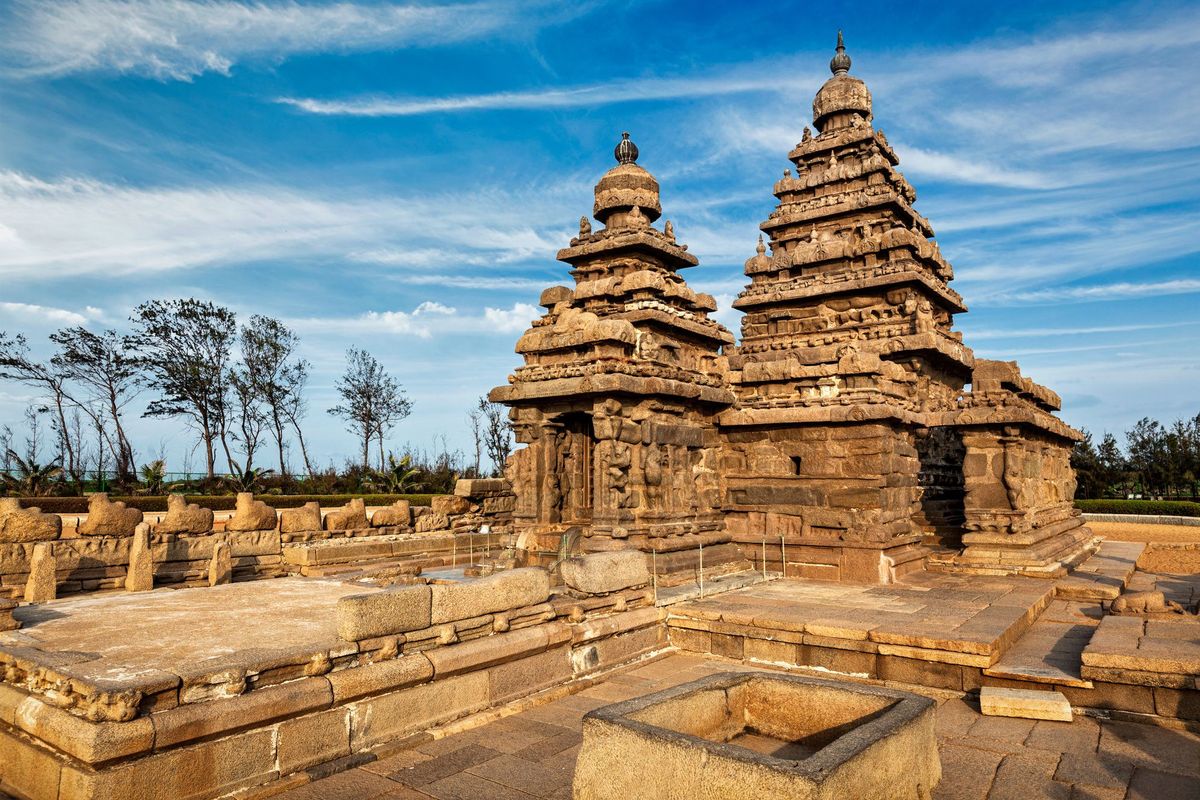
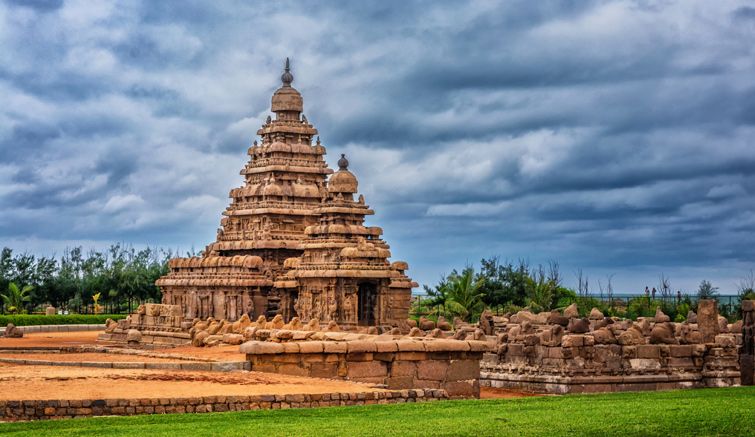
Mahabalipuram sits 60 kilometres south of Chennai on the Coromandel Coast a small fishing town that was the port city of the Pallava dynasty (7th to 9th century CE) and the site of the most extraordinary concentration of early Dravidian rock-cut architecture in the world. The Shore Temple (700 CE, UNESCO World Heritage Site), the Pancha Rathas (five monolithic temple chariots carved from single boulders), Arjuna's Penance (the world's largest bas-relief, 27 metres wide and 9 metres high, depicting the descent of the Ganges), and the series of cave temples carved directly into the granite outcrops that dot the coastline together represent the founding moment of the Dravidian temple tradition that would culminate three centuries later at Thanjavur. The 2004 Indian Ocean tsunami revealed additional Pallava structures beneath the sea that are now visited by divers a haunting underwater heritage site that gives Mahabalipuram a dimension no other UNESCO site in Tamil Nadu can match.
Best Time to Visit- October to March (finest beach weather, heritage sites comfortable) • January to February (fewest crowds, clearest water for the underwater dive) • avoid June to September (northeast monsoon, rough sea, some heritage sites partially flooded).
Places to Visit- Shore Temple (UNESCO) • Arjuna's Penance • Pancha Rathas • Mahishasuramardini Cave • Krishna's Butter Ball • Sculptor Workshops • Mahabalipuram Beach • Tiger Cave
What to Eat- Tiger Prawn Curry at the beachside restaurants (Mahabalipuram's seafood is the finest on the northern Coromandel Coast) • Crab masala • Idli-Sambar at the dawn tea stalls • Lobster preparations (seasonal) • Fresh coconut • Filter Coffee • Tandoori seafood at the beach shacks
Top Things to Do
• Shore Temple at sunrise (700 CE, UNESCO) arrive at 6 AM when the temple is lit gold against the sea; the earliest monument of the Dravidian temple tradition.
• Arjuna's Penance bas-relief the 27-metre-wide rock carving depicting the descent of the Ganges; the detail of the carving at eye level on the far left is the finest work.
• Pancha Rathas (five monolithic chariots) five complete temple forms carved from single boulders, each in a different Dravidian architectural style.
• Sculptor workshop visit the living craft tradition that has continued since the 7th century; watch a master carving a granite Nataraja.
• Underwater Pallava ruins dive the tsunami-revealed structures 7 metres below the surface; PADI certification required, arranged with our dive partner.
• Five Rathas to Shore Temple sunrise walk (1.5 km) the entire heritage zone can be walked in a single morning before the day-trip crowds arrive from Chennai.
5. Ooty & Nilgiris Queen of Hill Stations
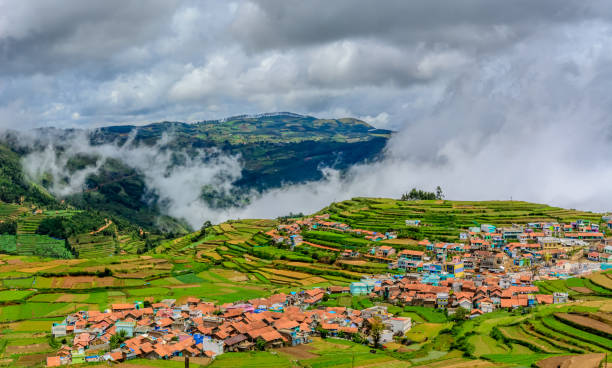
Ooty (Udhagamandalam) sits at 2,240 metres in the Nilgiri Hills the Blue Mountains of Tamil Nadu at the convergence of the Western Ghats, the Eastern Ghats, and the Deccan Plateau in a landscape of eucalyptus and pine forests, tea estates, and the Nilgiri Biosphere Reserve, which is home to the largest wild elephant population in Asia and the critically endangered Nilgiri Tahr. The Nilgiri Mountain Railway (UNESCO World Heritage Site since 2005), the Ooty Botanical Garden (established 1848, one of the finest in India), the Doddabetta Peak (2,637 metres, the highest point in the Nilgiris), and the Pykara Lake and Falls give the town a heritage and natural richness that is gradually being overwhelmed by tourism infrastructure which makes the timing of a visit increasingly important. Coonoor, 19 kilometres downhill, is quieter, less developed, and centred on the finest tea estates of the Nilgiris the fields between Coonoor and Kotagiri produce some of India's most celebrated Nilgiri teas.
Best Time to Visit- October to June (hill station season, all attractions accessible) • October to November (post-monsoon the Nilgiris at their greenest, clearest skies) • March to May (pleasant weather, tea plucking season) • Monsoon July to September beautiful but misty, some roads affected.
Places to Visit- Ooty Botanical Garden • Doddabetta Peak • Nilgiri Mountain Railway (UNESCO) • Pykara Lake • Coonoor Tea Estates • Mudumalai Wildlife Sanctuary • Toda Village • Kotagiri • Emerald Lake.
What to Eat- Nilgiri Tea (first flush, brewed at the estate completely different from commercial tea) • Ooty Homemade Chocolates (the town's most famous product) • Varkey (layered sweet bread, an Ooty baker tradition) • Nilgiri lamb preparations at the hill station restaurants • Mutton Kothu Parotta • Carrot Halwa (the Nilgiri carrots are exceptionally sweet) • Filter Coffee
Top Things to Do
• Nilgiri Mountain Railway steam section (Mettupalayam to Coonoor) the UNESCO steam locomotive on the steepest section of the rack-and-pinion railway.
• Tea estate tour at Coonoor (Highfield or Korakundah estates) watch the plucking, withering, rolling, and drying; taste the single-flush Nilgiri tea at the factory.
• Mudumalai Wildlife Sanctuary dawn safari at the base of the Nilgiris; the finest elephant, gaur, and sambar sightings in Tamil Nadu.
• Doddabetta Peak (2,637 m) the highest point in the Nilgiris; on clear days in October and November the plains of Tamil Nadu are visible 2,000 metres below.
• Toda tribal village the indigenous Toda community's distinctive barrel-roofed stone houses and sacred buffalo culture; visit with a community liaison.
• Pykara Lake and Falls the reservoir and waterfall 21 km from Ooty; the boat ride on the lake with the Nilgiri forest reflected in the water is the finest view near Ooty.
6. Rameswaram- The Sacred Island at Land's End
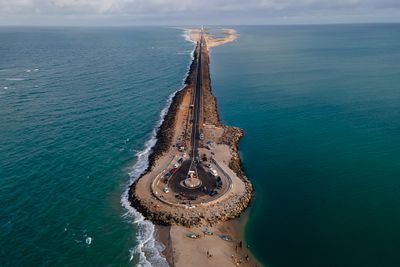
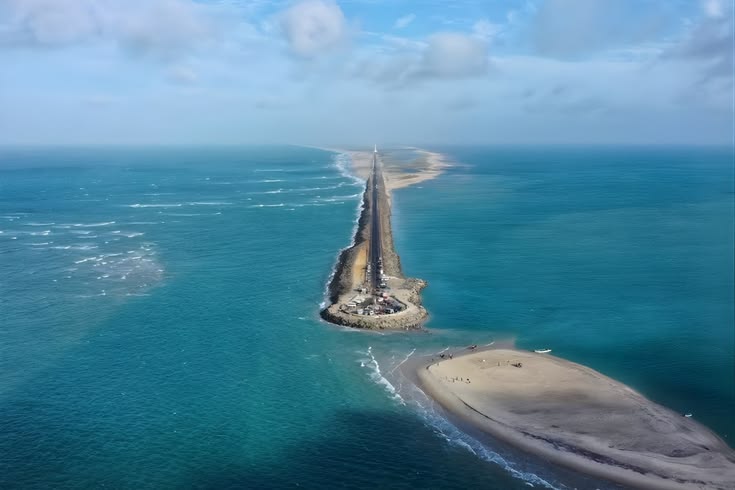
Rameswaram is one of the four sacred dhams of Hinduism and the southernmost point of the Ram Setu the ancient causeway of floating stones that Valmiki's Ramayana describes as the bridge built by Lord Hanuman's army to Lanka. The island sits in the Palk Strait between India and Sri Lanka, connected to mainland India by the Pamban Bridge a 2-kilometre railway bridge over the sea that is one of the most dramatic engineering achievements in South India and gives an extraordinary approach to the island. The Ramanathaswamy Temple, dedicated to Lord Shiva, has 22 sacred theerthams (wells) whose water pilgrims must bathe in before taking the main darshan a purification sequence that takes 2 to 3 hours and is one of the most physically immersive pilgrimage experiences in India. The temple's third prakaram (outer corridor) is the longest temple corridor in Asia at 1,220 metres, with columns every few feet creating a perspective of extraordinary depth.
Best Time to Visit- October to April (comfortable pilgrimage and beach weather) • December to February (finest sea conditions, Dhanushkodi accessible) • avoid May to September (monsoon, rough sea, some beach roads to Dhanushkodi impassable).
Places to Visit- Ramanathaswamy Temple • Agnitheertham Beach • Pamban Bridge • Dhanushkodi • Adam's Bridge (Ram Setu) • Gandamadana Parvatham • Lakshmana Theertham • Jada Theertham.
What to Eat- Rameswaram Fish Curry (the Palk Strait catch, prepared in a distinctly different style from the mainland more tamarind, less coconut) • Pamban Crab Masala (the blue swimmer crabs of the strait) • Idiyappam with Egg Curry • Appam with Fish Curry • Pongal at the temple prasad counters • Tender Coconut from the island's palm groves.
Top Things to Do
• 22 theertham bathing sequence the pilgrimage purification through 22 sacred wells inside the Ramanathaswamy Temple; allow 3 hours with a guide.
• Agnitheertham dawn bath the beach where the pilgrimage begins at the sea's edge, at dawn when the sky turns orange.
• Ramanathaswamy Temple corridor the 1,220-metre corridor is the longest in Asia; walk the full length at dawn before the pilgrims fill it.
• Dhanushkodi ghost town (4WD beach drive) the destroyed city at the island's tip; the ruins of the church, the railway station, and the houses.
• Pamban Bridge viewpoint the railway bridge approach to the island; the sea view from both sides of the bridge.
• Adam's Bridge (Ram Setu) view the chain of limestone shoals and sandbanks visible from Dhanushkodi, extending towards Sri Lanka.
7. Kanyakumari- Where Three Seas Meet
Kanyakumari is the southernmost point of the Indian subcontinent the rocky cape where the Arabian Sea, the Bay of Bengal, and the Indian Ocean converge in visible colour differences on clear days, and where the sunrise and sunset over the sea can be observed simultaneously from the same vantage point during the equinoxes. The Vivekananda Rock Memorial, built on a rocky islet 500 metres offshore where Swami Vivekananda meditated before his journey to the 1893 Parliament of World Religions in Chicago, and the 133-foot Thiruvalluvar Statue on an adjacent rock, are approached by a ferry that operates continuously from dawn to dusk. The Kumari Amman Temple the goddess who guards the cape, believed to be a form of Parvati waiting for the marriage with Shiva that never came is one of the 51 Shakti Peethas, and the pilgrimage to the southernmost tip of India has the specific emotion of arriving at a land's end.
Best Time to Visit- October to March (finest weather) • October to November (post-monsoon clarity the three sea colours are most visible) • Equinox dates (March 21 and September 23) sunrise and sunset visible on the same horizon simultaneously • avoid monsoon June to September (rough seas, ferry to Vivekananda Rock may be suspended)
Places to Visit- Vivekananda Rock Memorial • Thiruvalluvar Statue • Kumari Amman Temple • Kanyakumari Beach • Padmanabhapuram Palace • Suchindram Temple • Gandhi Memorial
What to Eat- Kanyakumari Fish preparations (the three-sea confluence produces an extraordinary variety of fish; the local Ayakura and Nei Meen preparations are unique to this coastline) • Crab masala • Kozhukattai • Appam with Stew • Idiyappam • Coconut-based curries from the Kerala-Tamil border cuisine • Filter Coffee with coconut-flour snacks
Top Things to Do
• Vivekananda Rock Memorial sunrise ferry the first ferry of the day at dawn; the memorial at sunrise with the sea in all directions.
• Thiruvalluvar Statue the 133-foot statue of the Tamil poet-saint on the adjacent rock; the inscription from the Thirukkural on the base.
• Kumari Amman Temple the goddess at land's end; the offering of camphor at the southern-most point of India.
• Kanyakumari sunset from the western beach the sunset into the Arabian Sea while the eastern horizon remains illuminated.
• Padmanabhapuram Palace (32 km) the 16th-century wooden palace of the Travancore kings, with rosewood ceilings, Chinese tile floors, and a weapons hall.
• Suchindram Temple musical pillars (14 km) the granite pillars that produce musical notes when struck; each pillar is carved to a different tonal resonance.
8. Chettinad- Mansions, Antiques, and the Spiciest Cuisine in South India
Chettinad is a cluster of 75 villages in the Sivaganga district of Tamil Nadu, the ancestral homeland of the Nattukotai Chettiars a community of merchant bankers who built extraordinary mansions across these arid villages between 1850 and 1930 using materials imported from across the world: Belgian crystal mirrors, Burmese teak, Italian marble, and Athangudi tiles (a geometrically patterned flooring material made in Chettinad and now exported globally). The mansions some of them 100 rooms deep, arranged around a sequence of interior courtyards, with plaster facades decorated in the Indo-Saracenic style are the most architecturally ambitious private residences built by an Indian merchant community, and the best of them (the Chidambara Vilas, the Raja's Palace, the Visalakshi Mahal) are now heritage hotels or open to visits. Chettinad is also famous for its cuisine a preparation tradition built on a unique spice blend (kalpasi, marathi mokku, and star anise alongside the usual Dravidian base) and a cooking philosophy that produces the finest meat curries in South India.
Best Time to Visit- October to February (comfortable weather in the Chettinad plains) • avoid March to June (extreme heat, 42–45°C in the Sivaganga district) • Monsoon July to August the villages are green and less dusty but hot.
Places to Visit- Karaikudi • Kanadukathan Village • Chidambara Vilas • Visalakshi Mahal • Athangudi Village • Devakottai • Chettinad Museum • Pillaiyarpatti Temple.
What to Eat- Chettinad Chicken Curry • Kavuni Arisi • Kavuni Arisi Payasam • Kara Kuzhambu • Idiyappam with Chettinad Egg Curry • Paniyaram • Vetrilai Paaku.
Top Things to Do
• Heritage mansion circuit guided walk through the village mansions; the Chidambara Vilas, Visalakshi Mahal, and the Raja's Palace.
• Athangudi tile workshop the village where the distinctive geometric handmade floor tiles have been produced for 150 years.
• Chettinad cooking class the specific spice-grinding techniques, the use of kalpasi and marathi mokku, and the preparation of Chettinad Chicken Curry.
• Antique shops of Karaikudi the Chettiars brought artefacts from Burma, Malaysia, and China for their homes; the antique market in Karaikudi.
• Village well photography the deep circular wells of Chettinad, surrounded by the baked red soil, are among the most photographed landscapes.
• Chettinad architecture and tile museum the museum in Karaikudi that documents the mansion construction techniques and the imported materials.
9. Kodaikanal- Princess of Hill Stations
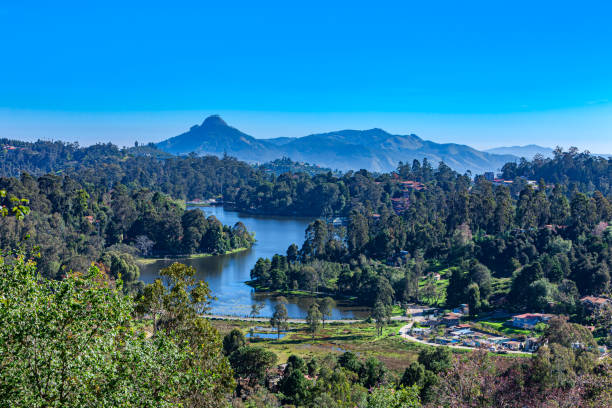
Kodaikanal sits at 2,133 metres on the Palani Hills of the Western Ghats, 120 kilometres north of Madurai, and occupies a position that gives it views of both the Tamil Nadu plains to the east and the Kerala coast to the west on clear days. The town was developed by American missionaries and European colonists from the 1840s as a summer retreat, and its character retains a distinctly different quality from Ooty's: quieter, less developed, and centred on the Kodaikanal Lake (a star-shaped artificial lake at the town's centre) rather than a main commercial street. The Coaker's Walk a 1-kilometre pathway along the edge of the plateau gives a sheer drop view of the Palani Hills descending to the plains that is the finest panoramic moment in the town. The Berijam Lake (20 km, permit required), set in dense shola forest, is one of the finest unspoiled environments in the Southern Western Ghats, and the Vattakanal area below the main town has a reputation for the finest trekking in the Palani Hills.
Best Time to Visit- October to June (hill station season, all roads accessible) • October to November (finest post-monsoon clarity, plains visible from Coaker's Walk) • April to May (pleasant weather, before the peak summer crowds) • Monsoon July to September atmospheric but some walks affected by rain
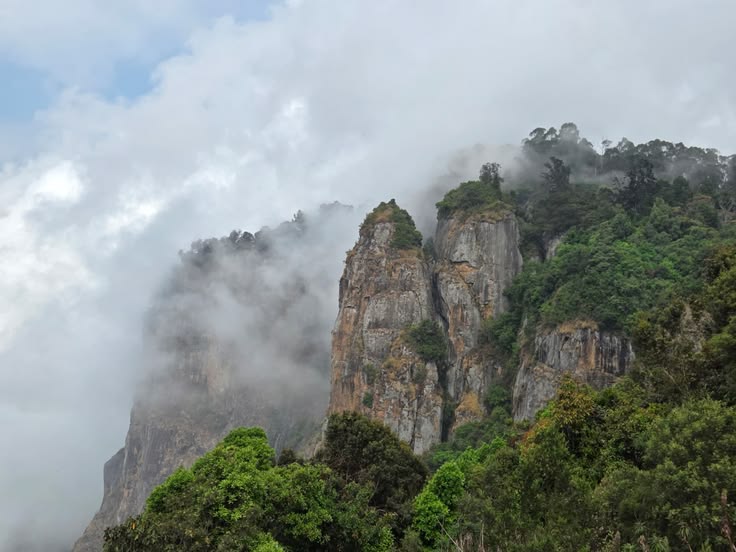
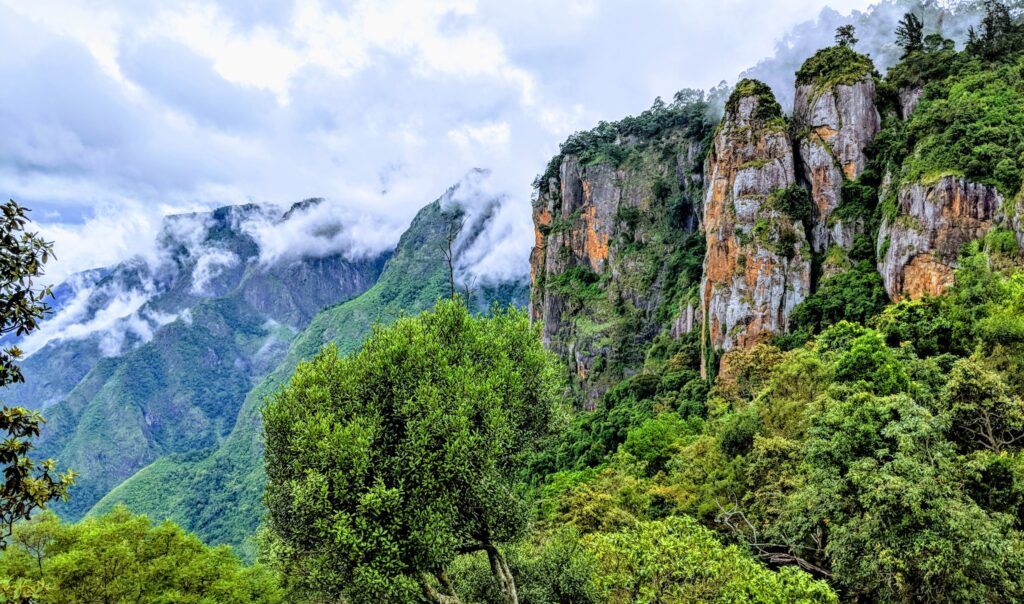
Places to Visit- Coaker's Walk • Kodaikanal Lake • Berijam Lake • Vattakanal • Bear Shola Falls • Bryant Park • Silver Cascade Falls • Pillar Rocks • Perumal Peak
What to Eat- Kodaikanal Homemade Chocolate (the town's most famous product; the Cottage Industries shop on PT Road has sold chocolate since the 1940s) • Eucalyptus honey from the Palani Hills • Nilgiri Tea from the Kodaikanal tea shops • Pamba Cake (a local sweet) • Fresh strawberries (in season February to April) • South Indian Thali at the town's traditional restaurants
Top Things to Do
• Coaker's Walk at dawn the plateau-edge pathway at 6 AM before the mist clears; the sheer drop to the plains 2,000 metres below.
• Berijam Lake forest drive (20 km, permit required) the shola forest on the road to this undisturbed lake; Nilgiri flycatcher and Indian bison in the forest.
• Vattakanal waterfall and Silent Valley viewpoint the 30-minute descent below the plateau; the green valley and the waterfall.
• Kodaikanal Lake boating at dawn the star-shaped lake before the pedal boat fleet arrives; the early morning reflection of the eucalyptus trees.
• Bear Shola Falls forest walk the 2-km forest path to the seasonal waterfall; the shola forest on the approach has endemic birds.
• Solar Observatory (Kodaikanal Observatory) one of India's oldest solar observatories (1899), open for tours on select days.
10. Coonoor- The Tea Garden Retreat of the Nilgiris
Coonoor sits at 1,850 metres in the Nilgiri Hills of Tamil Nadu a quieter, greener, and less commercial alternative to nearby Ooty, surrounded by rolling tea estates, eucalyptus forests, mist-covered valleys, and colonial-era bungalows. Established during the British colonial period as a hill retreat and tea-growing centre, Coonoor today remains the heart of the Nilgiri tea industry, producing some of the finest high-grown teas in India. The Nilgiri Mountain Railway (UNESCO World Heritage Site) winds dramatically through Coonoor with stone bridges, tunnels, and tea-covered slopes creating one of the most scenic train journeys in Asia. The Sim's Park botanical garden, Dolphin's Nose viewpoint, Lamb's Rock, and the tea estates stretching toward Kotagiri give Coonoor a landscape richness that rewards slow travel, long walks, and early mornings in the hills.
Best Time to Visit- October to June (pleasant hill weather, tea estates at their finest) • October to November (post-monsoon greenery and clearest mountain views) • March to May (cool summer weather, ideal for tea estate walks) • Monsoon July to September atmospheric and misty, but some outdoor activities affected by rain
Places to Visit- Sim's Park • Dolphin's Nose • Lamb's Rock • Nilgiri Mountain Railway (UNESCO) • Highfield Tea Estate • Hidden Valley • Catherine Falls • Law's Falls • Kotagiri
What to Eat- Nilgiri Tea • Homemade chocolates • Ooty Varkey biscuits • South Indian breakfast with Idli, Vada, and Filter Coffee • Nilgiri lamb curry • Fresh carrot cake and bakery items from colonial-style bakeries • Eucalyptus honey from the Nilgiris
Top Things to Do
• Nilgiri Mountain Railway ride through Coonoor the UNESCO heritage train journey through tunnels, tea gardens, and steep mountain slopes.
• Tea factory and plantation tour watch the tea-making process from leaf plucking to drying and taste fresh Nilgiri tea at the source.
• Dolphin's Nose viewpoint the dramatic cliff-edge viewpoint overlooking the Catherine Falls and the Nilgiri valleys below.
• Lamb's Rock forest viewpoint the quiet viewpoint above dense forest and tea estates with sweeping views of the Coimbatore plains.
• Sim's Park botanical garden the 19th-century botanical garden with rare trees, flowering plants, and landscaped hill terraces.
• Hidden Valley and tea estate walks early morning walks through mist-covered tea plantations with views of the rolling Nilgiri hills.
11. Tiruchirappalli (Trichy)- Temple City of the Kaveri
Tiruchirappalli (Trichy) sits on the banks of the Kaveri River in central Tamil Nadu one of the oldest continuously inhabited urban centres in South India and historically one of the most important temple and trading cities of the Chola kingdom. The city is dominated by the Rockfort Temple a 3.8-billion-year-old granite outcrop rising dramatically above the plains, crowned by the Ucchi Pillayar Temple at the summit, from where the Kaveri river system and the island of Srirangam are visible across the city. Srirangam itself home to the Sri Ranganathaswamy Temple is the spiritual heart of Trichy and the largest functioning Hindu temple complex in the world, spread across 156 acres with 21 gopurams and seven concentric enclosures. The city combines Chola, Nayak, and colonial influences with a deeply active pilgrimage culture that makes it one of the most significant temple destinations in Tamil Nadu.
Best Time to Visit- October to March (comfortable temple-visiting weather) • December to January (festival season in Srirangam, coolest temperatures) • Vaikunta Ekadasi Festival December-January one of the biggest temple festivals in South India • avoid April to June (extreme summer heat)
Places to Visit- Sri Ranganathaswamy Temple • Rockfort Temple • Jambukeswarar Temple • Kallanai Dam • Samayapuram Mariamman Temple • St. Joseph's Church • Mukkombu • Thiruvanaikaval
What to Eat- Srirangam Puliyodarai • Iyengar-style South Indian meals • Kothu Parotta • Banana Leaf Meals • Murukku and Seedai snacks • Jigarthanda • Traditional Filter Coffee
Top Things to Do
• Sri Ranganathaswamy Temple exploration the world's largest functioning Hindu temple complex with seven concentric enclosures and towering gopurams.
• Rockfort Temple sunrise climb the granite hill climb at dawn with panoramic views of the Kaveri River and the temple city below.
• Jambukeswarar Temple at Thiruvanaikaval the water-element Shiva temple where an underground spring flows continuously beneath the sanctum.
• Kallanai Dam heritage visit the 2,000-year-old Chola dam across the Kaveri still functioning today and one of the greatest engineering achievements of ancient India.
• Srirangam evening temple streets the flower markets, brass shops, sweet stalls, and devotional atmosphere around the temple after sunset.
• Samayapuram Mariamman Temple pilgrimage one of Tamil Nadu's most important goddess temples, visited by thousands of devotees daily.
12. Chidambaram- The Cosmic Dance of Shiva
Chidambaram is one of the most spiritually and philosophically important temple towns in Tamil Nadu the sacred site where Lord Shiva is worshipped as Nataraja, the Cosmic Dancer whose tandava dance represents the rhythm of creation and destruction in the universe. The Chidambaram Nataraja Temple spread across 40 acres in the centre of the town is one of the rare temples where Shiva is worshipped in anthropomorphic dancing form rather than as a lingam, and its golden-roofed sanctum is among the holiest spaces in Shaivism. The temple's architectural layers from the Chola, Pallava, Pandya, and Vijayanagara dynasties make it one of the most historically important temple complexes in South India. Just outside the town lies the Pichavaram Mangrove Forest one of the largest mangrove ecosystems in India, where narrow waterways pass through dense green mangrove tunnels creating one of the most atmospheric boat rides in Tamil Nadu.
Best Time to Visit- October to March (pleasant weather for temple visits and boating) • December to January (Margazhi festival season, temple dance celebrations) • November to February (best birdwatching season in Pichavaram) • avoid April to June (hot and humid coastal weather).
Places to Visit- Nataraja Temple • Pichavaram Mangrove Forest • Thillai Kali Temple • Annamalai University • Sivakami Amman Temple • Chidambaram Temple Tank • Pitchavaram Backwaters.
What to Eat- Tamil Brahmin meals on banana leaf • Puliyodarai and temple prasadam • Fresh seafood near Pichavaram • Kuzhi Paniyaram • Filter Coffee • Coconut-based coastal curries • Adhirasam sweet.
Top Things to Do
• Nataraja Temple darshan witness Lord Shiva in the rare cosmic dancer form beneath the golden-roofed sanctum.
• Chidambara Rahasyam explanation the sacred philosophical symbolism hidden behind the temple curtain representing the formless divine.
• Pichavaram mangrove boat ride the narrow waterways through dense mangrove tunnels one of the finest eco-tourism experiences in Tamil Nadu.
• Temple architecture walk the Chola-era carvings, thousand-pillared halls, and the towering eastern gopuram filled with Bharatanatyam poses.
• Margazhi dance festival experience classical Bharatanatyam and Carnatic performances connected to the Nataraja tradition.
• Thillai Kali Temple visit the powerful goddess temple associated with the mythology of Shiva's cosmic dance in Chidambaram.
Adventurous Activities in Tamil Nadu Tour Packages
Tamil Nadu offers far more adventure and outdoor experiences than most travellers expect. Beyond its ancient temples and cultural heritage, the state is home to mist-covered hill stations, wildlife-rich forests, tea plantation trails, coastal adventures, mountain railways, mangrove ecosystems, and scenic trekking routes across the Western Ghats and the Eastern Ghats. Our Tamil Nadu tour packages combine nature, wildlife, soft adventure, and immersive outdoor experiences for travellers looking to explore the state beyond traditional sightseeing.
1. Nilgiri Mountain Railway Journey in Ooty & Coonoor- Ride the UNESCO-listed toy train through tunnels, tea estates, forests, bridges, and dramatic mountain landscapes in the Nilgiri Hills
2. Tea Estate Walks in Coonoor & Valparai- Guided plantation walks through rolling tea gardens with tea-tasting sessions and factory visits in the Western Ghats
3. Wildlife Safaris in Mudumalai & Anamalai Tiger Reserve- Jeep safaris and forest experiences for elephant, gaur, deer, leopard, and exotic bird sightings across Tamil Nadu’s protected forests
4. Trekking in Kodaikanal & Vattakanal- Scenic trekking routes through pine forests, grasslands, waterfalls, and valley viewpoints in the Palani Hills
5. Mangrove Boating in Pichavaram- Explore one of India’s largest mangrove forests through narrow backwater channels and dense green mangrove tunnels
6. Scuba Diving & Snorkelling in Rameswaram- Marine adventures in the Gulf of Mannar with coral reefs, shallow diving zones, and crystal-clear coastal waters
6. Dhanushkodi Beach Drive Adventure- Off-road coastal drives across the ghost town landscapes and sand stretches at the edge of the Indian mainland
7. Waterfall Trails in Courtallam & Hogenakkal- Monsoon waterfall experiences, coracle rides, herbal bathing falls, and scenic river landscapes
8. Camping & Bonfire Experiences in the Nilgiris- Riverside camps, forest stays, tea estate cottages, and eco-resorts with mountain views and outdoor evenings
9. Sunrise & Coastal Exploration in Kanyakumari & Mahabalipuram- Sunrise viewpoints, beach walks, surfing zones, coastal cycling, and sea-facing heritage experiences along the Coromandel Coast
Famous Food to Try During Your Tamil Nadu Trip
No Tamil Nadu tour package is complete without experiencing the state’s extraordinary food culture. Tamil cuisine is one of India’s oldest and most diverse culinary traditions, where every region has its own specialties, spice combinations, and cooking styles. From the iconic Idli-Sambar breakfast and crisp golden dosas to the deeply aromatic Chettinad Chicken Curry, food in Tamil Nadu is both comforting and intensely flavourful. The state is equally famous for its traditional Filter Coffee, brewed through stainless-steel filters and served in the classic tumbler-and-davara set that remains a daily ritual across Tamil homes and restaurants.
Travellers should also experience Tamil Nadu’s famous banana leaf meals, where rice, sambar, rasam, vegetables, pickles, papad, and sweets are served as a complete traditional feast. Regional favourites such as Kuzhi Paniyaram, Ambur Biryani, Dindigul Biryani, and seafood curries along the Coromandel Coast add another layer of culinary richness to the journey. Whether it is fresh seafood in Rameswaram, Chettinad spice blends in Karaikudi, or street-side tiffin stalls in Chennai and Madurai, Tamil Nadu offers one of the most rewarding food experiences in South India.
Festivals Worth Planning Around
Tamil Nadu's festival calendar is one of the richest in India. Visiting during major celebrations transforms any temple-town visit into something extraordinary.
Pongal (January)- Tamil Nadu's most important harvest festival, celebrated over four days with great warmth and color across the entire state. The cattle-racing tradition of Jallikattu, revived with enormous cultural passion in recent years, takes place during Pongal in rural areas.
Thaipusam (January–February)- One of the most dramatic Hindu festivals anywhere in the world, centered on Lord Murugan temples. The festival at Palani and in Chennai draws hundreds of thousands of devotees, many carrying kavadi (decorated arches and hooks) in acts of devotion that have to be witnessed to be believed.
Meenakshi Thirukalyanam (April–May)- The celestial wedding of Goddess Meenakshi and Lord Shiva, celebrated at the Meenakshi Amman Temple in Madurai with elaborate processions and rituals over ten days. One of South India's most spectacular religious festivals.
Karthigai Deepam (November–December)- Celebrated across Tamil Nadu but most powerfully at Tiruvannamalai, where a massive beacon flame is lit atop Arunachala Hill. The town fills with hundreds of thousands of pilgrims for the Girivalam walk around the hill.
Hemis-style Chidambaram Natyanjali Dance Festival (February–March)- Classical Bharatanatyam performances by leading dancers at the Chidambaram Nataraja Temple, one of the most atmospheric settings for classical Indian dance anywhere in the country.
Chennai Music Season (December–January)- The Margazhi season is the world's largest classical music festival, with hundreds of Carnatic music and Bharatanatyam performances spread across venues throughout Chennai over six weeks. A cultural event of global significance.
Best Time to Visit Tamil Nadu
October to February (The Best Season)- The northeast monsoon typically withdraws from Tamil Nadu by late October or November, leaving the state in its best condition: cooler temperatures (20°C–28°C in most areas), clear skies, and manageable humidity. This is the ideal window for temple tours, city exploration, heritage travel, and coastal visits. Winter travellers will find the weather ideal for temple tours, family trips and road journeys. December and January are particularly pleasant for Madurai, Rameswaram, Thanjavur, and Kanyakumari the southern regions that can be uncomfortably hot in summer.
March to June Summer- Tamil Nadu heats up from March onward, with temperatures in the plains and temple towns climbing to 35°C–40°C by April and May. The hill stations, however, come into their own during this period. Summer brings clear mountain skies and is perfect for honeymoon packages to Ooty and Kodaikanal. Ooty's Flower Show in May is one of South India's most celebrated annual events.
July to September (Northeast Monsoon Season)- The southwest monsoon brings moderate rainfall to western Tamil Nadu (the Nilgiris and Western Ghats receive substantial rain). The northeastern plains and the temple towns are relatively dry during this period — unlike most of India, Tamil Nadu's main monsoon (the northeast monsoon) arrives in October–November rather than June. Monsoon paints the Western Ghats in deep green, making it a favourite for nature lovers and budget travellers who enjoy mist and quiet stays.
October–November (The Northeast Monsoon)- This is Tamil Nadu's "winter" monsoon, when the northeast monsoon brings heavy rains to the Coromandel Coast, Chennai, and the southern districts. While temple towns and hill stations are still accessible, heavy rain can disrupt coastal plans. Post-monsoon (late November onward) is excellent for photography and heritage travel as skies clear and landscapes are lush.
How to Get Around Tamil Nadu?
Tamil Nadu has one of South India's best transportation networks, making the logistics of a tour package manageable.
By Train: Indian Railways has excellent connectivity across Tamil Nadu. The Chennai–Madurai, Chennai–Coimbatore, and Chennai–Kanyakumari routes are well-served with overnight trains that make multi-city touring efficient and comfortable. The Nilgiri Mountain Railway from Mettupalayam to Ooty is a UNESCO World Heritage experience and should be booked well in advance.
By Road: Tamil Nadu's state highways are generally in good condition, and private vehicles (SUVs or comfortable sedans) are the standard mode for tour packages covering multiple destinations. The Nilgiri and Palani Hill roads require careful driving but are well-maintained.
By Air: Chennai has a major international airport. Domestic airports at Madurai, Coimbatore, Tiruchirappalli, and Tuticorin serve the state's interior and southern regions. Flying into Madurai or Trichy can dramatically shorten a circuit starting in the south.
Plan Your Tamil Nadu Trip with Vayable Trip
At Vayable Trip, we believe Tamil Nadu is best experienced through carefully paced journeys that combine culture, nature, spirituality, heritage, and local life. Our travel experts help travellers choose the right destinations, travel season, hotel category, and itinerary based on their interests whether it is temple architecture, hill stations, beaches, food trails, wildlife, or cultural festivals. Every itinerary is designed with local insight, comfortable routing, and enough flexibility to create a more meaningful South India experience.
From the ancient temple corridors of Madurai and Rameswaram to the mist-covered tea gardens of Ooty and Coonoor, we help travellers discover the most rewarding side of Tamil Nadu through thoughtfully curated holidays. Whether you are planning your first South India journey or returning to explore the state more deeply, Vayable Trip offers customizable Tamil Nadu tour packages designed for comfort, authenticity, and unforgettable experiences.