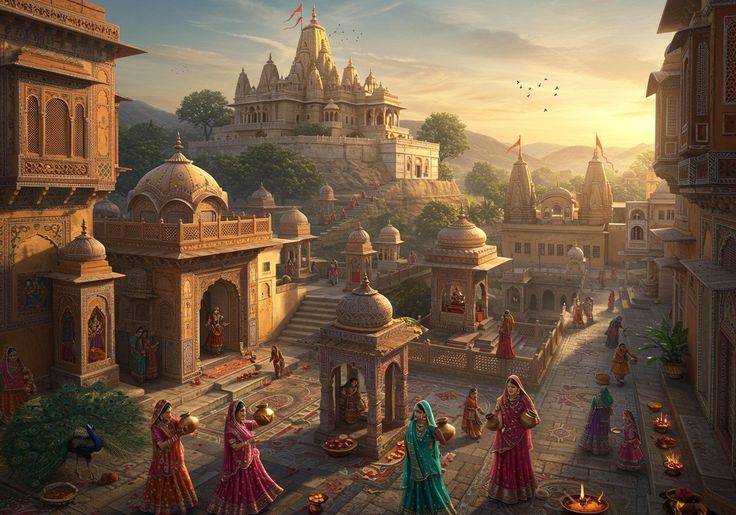
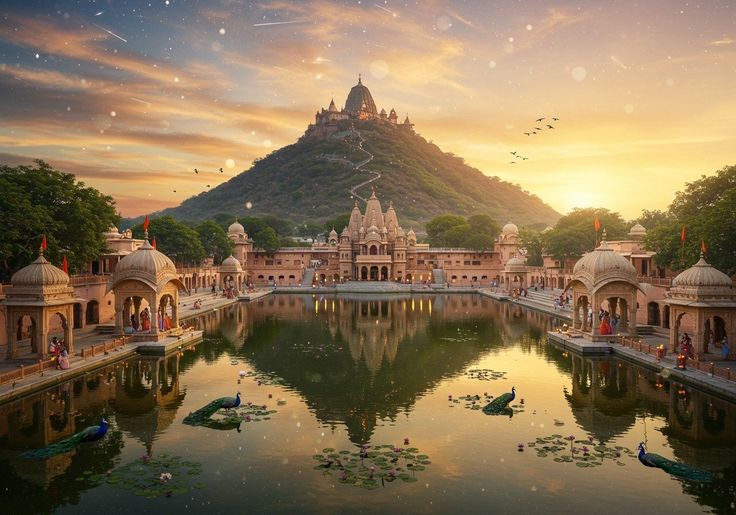
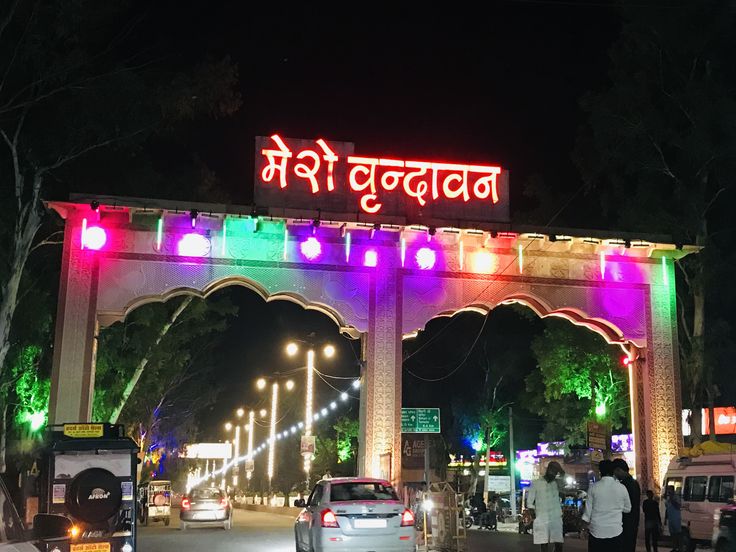
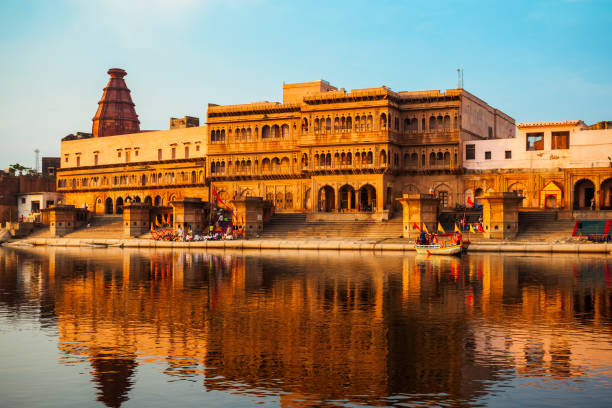
If Mathura is the city of Krishna's birth, Vrindavan is the city of his soul. Just 12 kilometres north of Mathura on the banks of the Yamuna River, Vrindavan the Sacred Forest is the place where Lord Krishna spent his childhood and early youth, where he played with the cowherd boys, where he danced and played his flute in the moonlit groves, where he stole butter from the milkmaids, where he loved Radha with a devotion that has become the defining metaphor of divine love in the Hindu tradition. Every grove, every tree, every ghat, every lane of this ancient town carries the memory of those divine childhood years and the devotional energy that 5,000 years of pilgrimage and worship has accumulated here makes Vrindavan one of the most charged spiritual landscapes on earth.
Vrindavan is not a single temple or a single monument. It is an entire sacred geography a town of over 5,000 temples, ashrams, and shrines, of ancient forest groves (kunjas) associated with specific episodes in Krishna's story, of ghats on the Yamuna where he bathed and played, of lanes where the sound of bhajans (devotional songs) is essentially continuous from dawn to midnight. Walking through Vrindavan with an open heart and an attentive mind is an experience of extraordinary richness a pilgrimage that engages every sense and challenges the boundaries between the mythological and the immediately present.
The town is also home to one of the world's largest concentrations of widows women who came to Vrindavan to spend their final years in devotional practice in the most sacred landscape of the Krishna tradition. Their presence white-clad, chanting, occupying the ashrams and the temple courtyards adds a dimension of human devotional intensity to Vrindavan that no other pilgrimage city in India quite replicates.
At Vayable Trip, our Vrindavan tour packages give you a complete, deeply respectful, and genuinely immersive experience of this extraordinary sacred town its great temples, its forest groves, its ghats, its musical culture, and the overwhelming devotional atmosphere that makes every visitor feel, however briefly, the presence of the divine.
Why Vrindavan is India's Most Spiritually Intense Destination
Vrindavan operates at a spiritual frequency unlike any other destination in India. This is not a claim about belief it is an observation about atmosphere. The density of devotional activity here the number of temples, the volume of bhajans, the concentration of sadhus and saints, the constant movement of pilgrims, the smell of flowers and incense and the Yamuna creates an environment of concentrated spiritual energy that is palpable regardless of your personal faith tradition. Writers, painters, musicians, and travellers from across the world who have visited Vrindavan without any prior connection to the Krishna tradition consistently describe it as one of the most atmospherically overwhelming places they have encountered.
The Holi festival transforms this already-extraordinary atmosphere into something completely beyond description. Vrindavan's Holi particularly the Phoolon ki Holi (Holi of Flowers) at the Banke Bihari Temple, where priests shower the gathered crowd with flower petals for a full hour before the colour is released is widely considered the most beautiful, most moving, and most genuinely transcendent version of this great festival anywhere in India.
Top Attractions in Vrindavan Tour Packages
Banke Bihari Temple
The most beloved and most visited temple in Vrindavan, the Banke Bihari Temple is dedicated to Lord Krishna in his most enchanting form a three-limbed (tri-bhanga) posture of playful beauty, with the eyes slightly downcast in the expression of divine love. The idol of Banke Bihari is said to have been discovered by the saint Swami Haridas in the 16th century, manifesting spontaneously from the forest in response to his devotional music. The temple is extraordinary for the intensity of the crowd's devotion particularly during the morning and evening darshans, when hundreds of pilgrims press forward toward the sanctum in waves of collective longing. The curtain before the idol is periodically drawn closed (because the gaze of Banke Bihari is believed to be so powerfully loving that worshippers may become transfixed and forget themselves) and then reopened a tradition that creates a rhythm of anticipation and release unique in Indian temple culture.
Radha Raman Temple
Considered by many devotees and scholars to be the most sacred and most atmospherically authentic of Vrindavan's great temples, the Radha Raman Temple houses a deity said to have self-manifested from a shaligram (sacred fossil stone) in 1542 in response to the devotions of the saint Gopal Bhatt Goswami. Unlike the newly constructed grandeur of some Vrindavan temples, the Radha Raman mandir is ancient, dark, intimate, and deeply devotional its sanctum lit by oil lamps, its walls bearing centuries of accumulated worship, its atmosphere one of the most genuinely sacred in the entire Braj Bhoomi. The puja traditions here follow the strictest Vaishnava protocols and have remained unchanged for nearly five centuries.
ISKCON Temple (Sri Krishna Balaram Mandir)
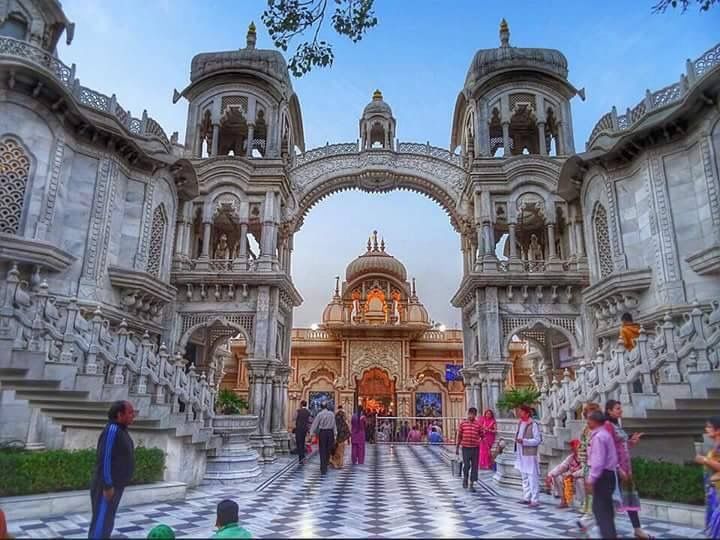
Established by A.C. Bhaktivedanta Swami Prabhupada in 1975, the ISKCON temple in Vrindavan is one of the most beautiful and most visited temples in the town, attracting both Indian and international devotees of the Hare Krishna movement. The white marble complex houses shrines to Krishna-Balaram, Radha-Shyamasundar, and Gaura-Nitai (Chaitanya Mahaprabhu and Nityananda Prabhu). The temple's emphasis on accessibility for visitors of all backgrounds, its excellent prasad (temple food) restaurant, and the magnetic atmosphere of collective chanting (kirtan) that fills the courtyard at all hours make it an excellent starting point for first-time visitors to Vrindavan.
Prem Mandir
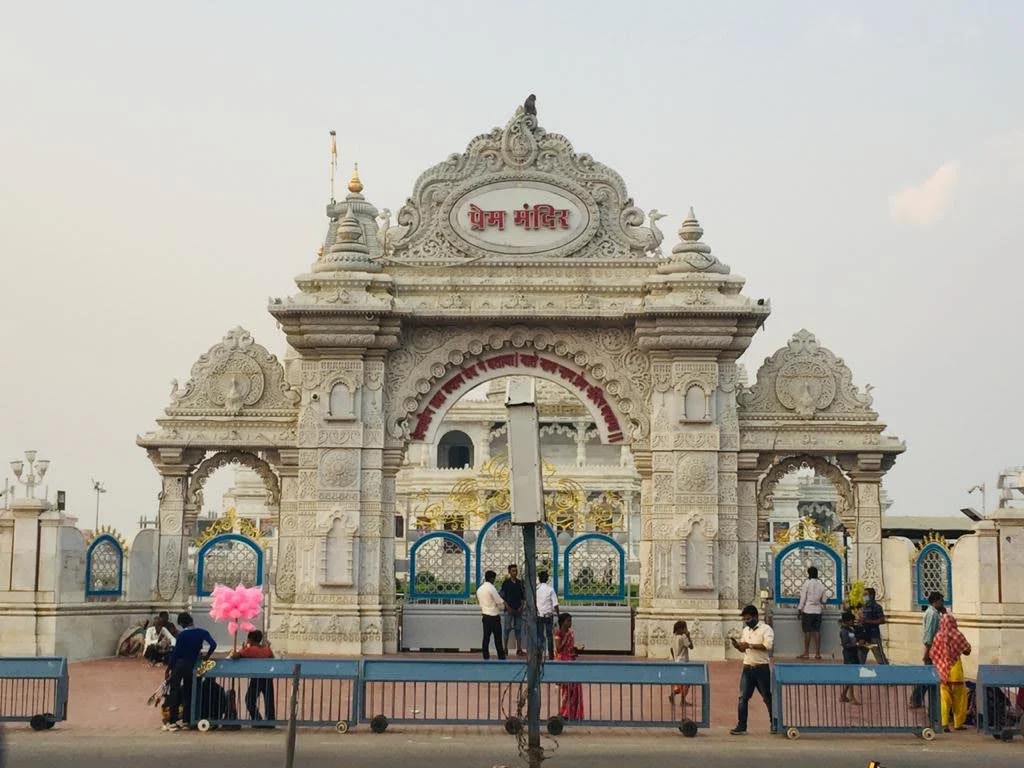
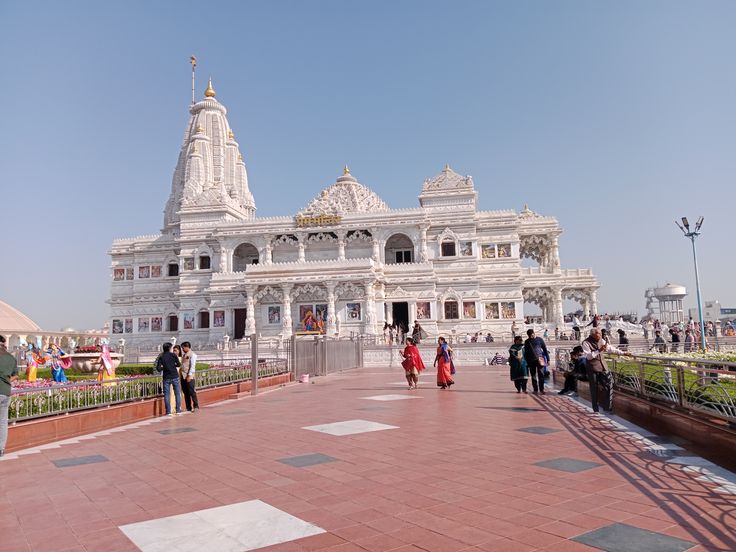
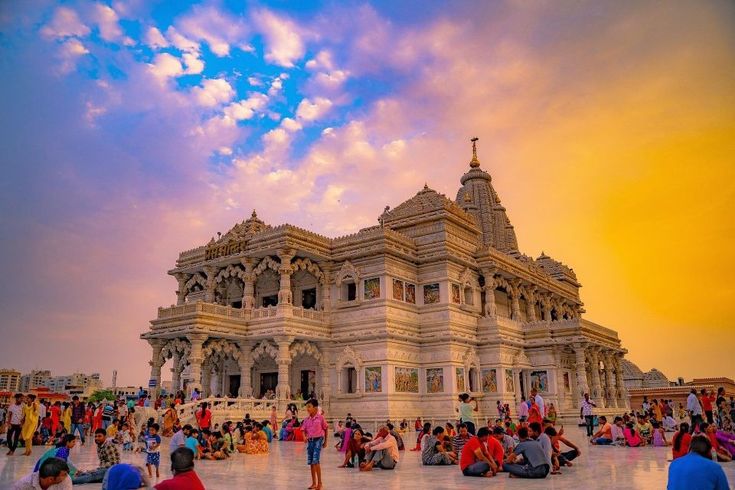
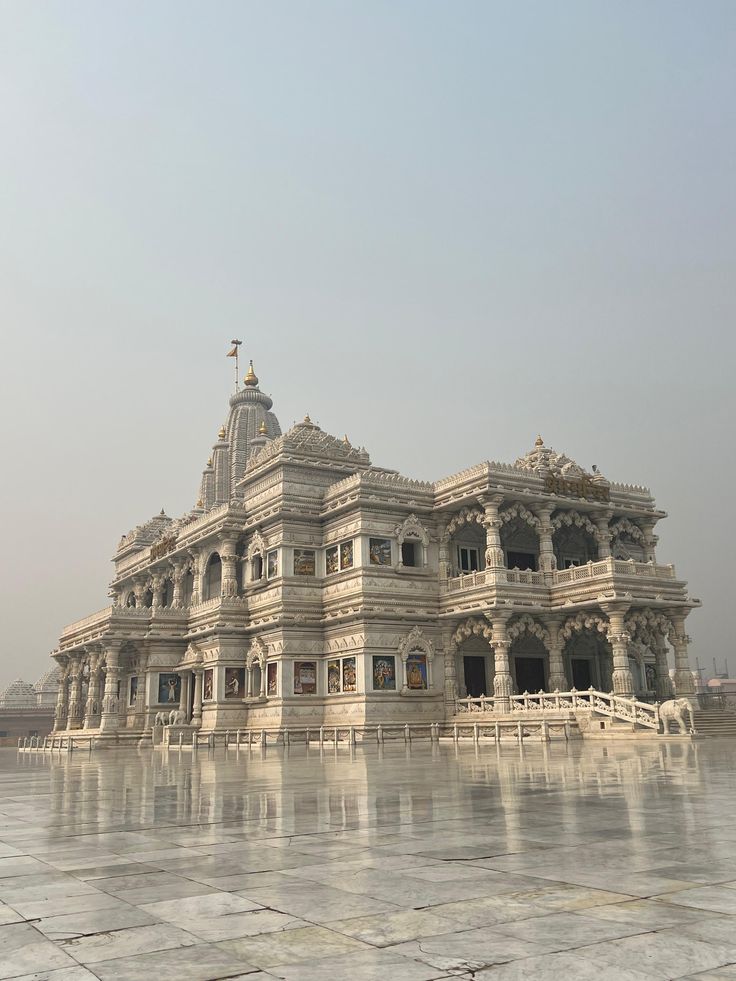
The most architecturally spectacular of Vrindavan's modern temples, the Prem Mandir (Temple of Divine Love) was built by the Jagadguru Kripalu Parishat and completed in 2012. The temple is constructed entirely of white Italian marble, with exquisite carvings covering every surface panels depicting scenes from Krishna's life, figures of the gopis (milkmaids), the Radha-Krishna forest groves, and the events of the Mahabharata. The temple complex is beautifully landscaped, with musical fountains that are illuminated at night in an extraordinary display of colour and light. At its best after sunset, Prem Mandir is one of the most photogenic temples in India and one of the finest modern examples of traditional Hindu temple architecture.
Nidhivan
One of the most mysterious and most sacred sites in Vrindavan, Nidhivan is a small, walled forest grove believed to be the site where Krishna performed the Maharas the great cosmic dance with Radha and the gopis every night. The trees of Nidhivan are distinctive their trunks and branches are intertwined in unusual formations that devotees interpret as evidence of the gopis frozen in their dance positions. The grove is open to visitors during the day, but closed every evening at sunset at which point, legend says, Krishna arrives with his divine companions for the nightly dance. No human may witness this, and the forest guards and priests of the adjacent Rangji Temple enforce the evening closure strictly. The atmosphere within Nidhivan even in full daylight is extraordinary, with an almost supernatural quality of hush and intensity.
Seva Kunj (Rang Ji Temple)
Adjacent to Nidhivan, the Seva Kunj is another sacred grove where Radha is believed to have arranged Krishna's hair and adorned him after the Maharas dance. The Rang Ji Temple complex that borders it is one of Vrindavan's finest architectural ensembles, built in the Rajput style with elaborate painted interiors. The combination of Nidhivan and Seva Kunj represents the most concentrated and most charged section of Vrindavan's sacred forest geography.
Govind Dev Temple
Built in 1590 by Raja Man Singh of Amber (Jaipur) and once described by Akbar as the finest building in the Mughal Empire, the Govind Dev Temple was originally a magnificent seven-storey structure whose upper four floors were destroyed by Aurangzeb because the spire was visible from his palace in Agra. The remaining three-storey structure still magnificent in red sandstone is one of the finest examples of early Hindu-Mughal architectural synthesis in India. The deity of Govind Dev (Krishna as divine cowherd) is one of the most significant in Vrindavan.
Madan Mohan Temple
One of Vrindavan's oldest surviving temples, the Madan Mohan Temple sits on a hill above the Yamuna River near the town's southern ghats and dates from the early 16th century making it one of the first of the great Vrindavan temples established by the Six Goswamis sent by Chaitanya Mahaprabhu to rediscover the sacred sites of the Braj Bhoomi. The view from the temple hilltop over the Yamuna River and the surrounding landscape is one of Vrindavan's finest.
The Yamuna Ghats
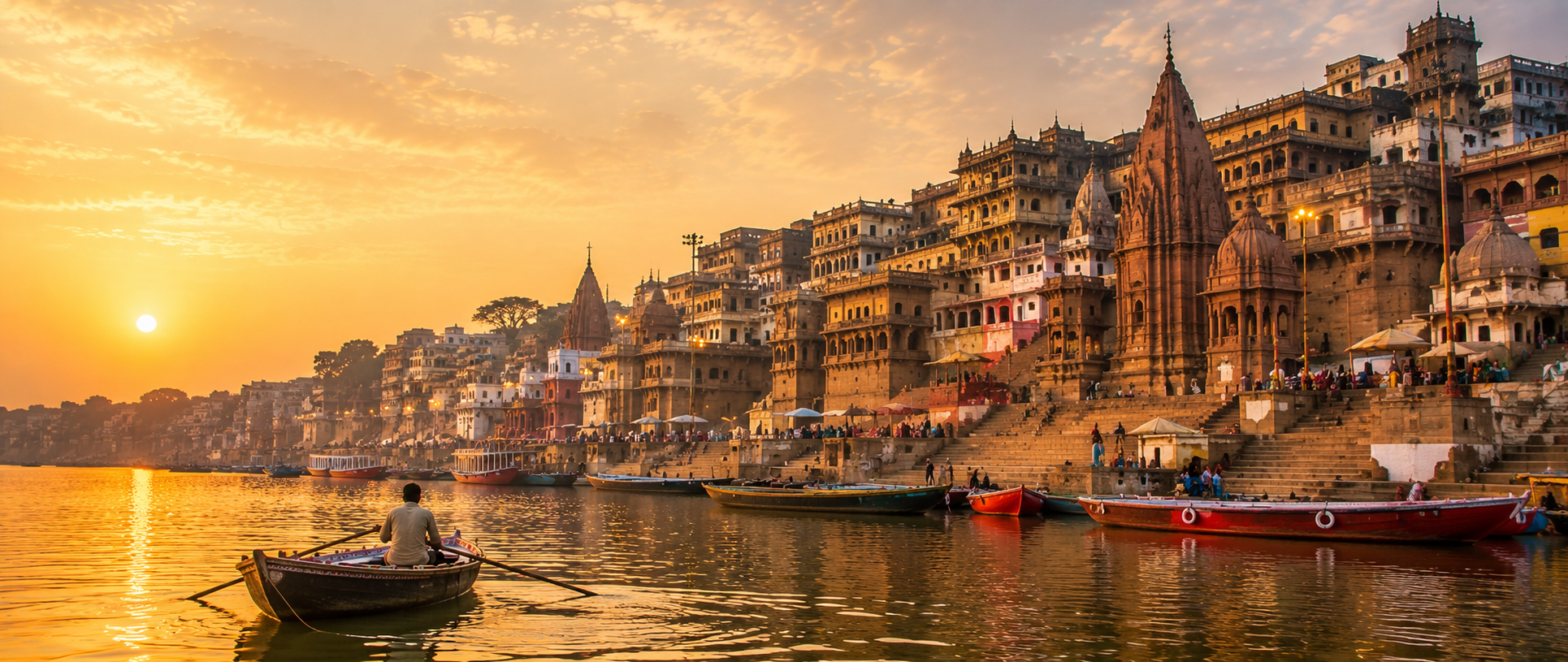
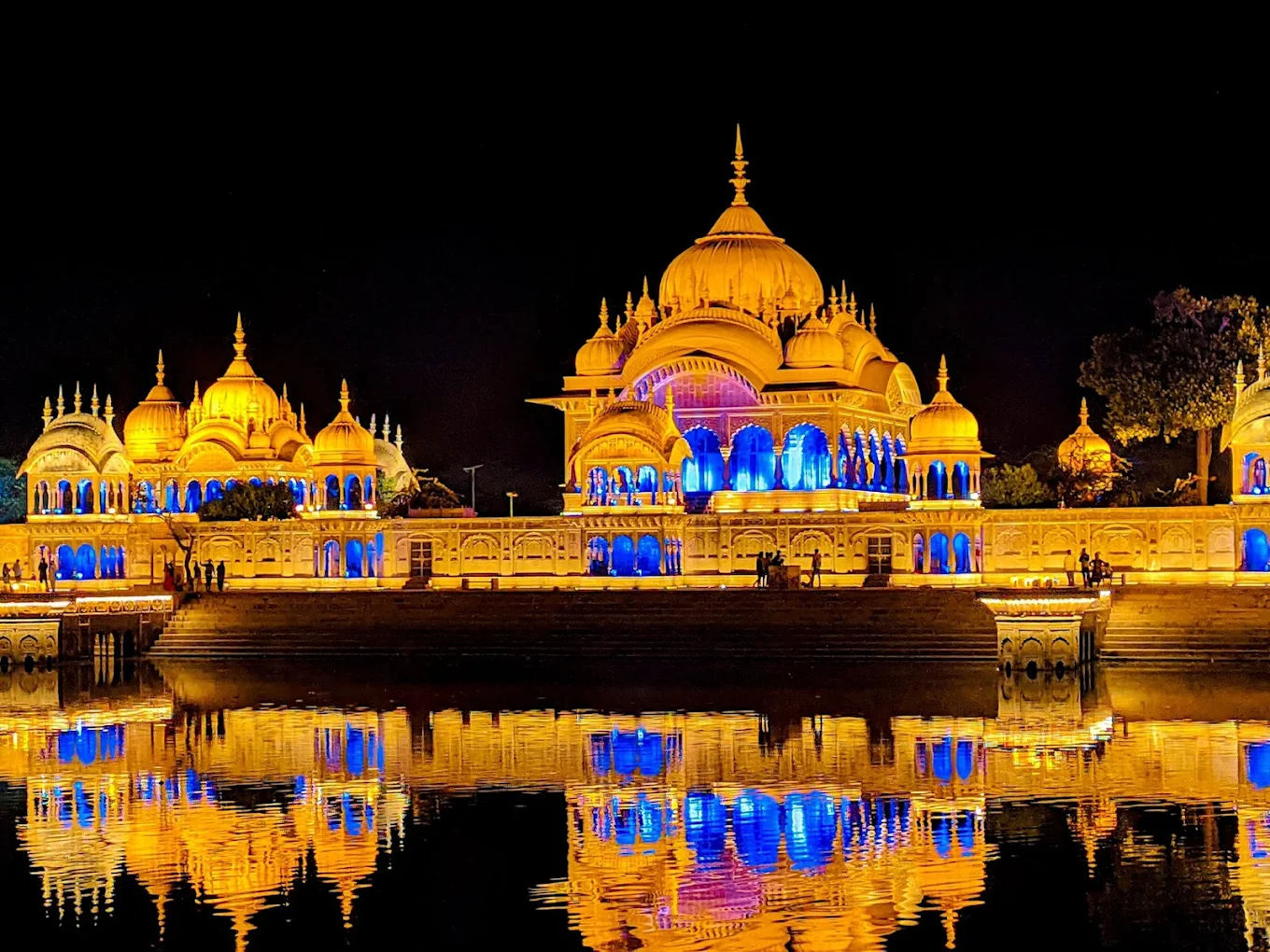
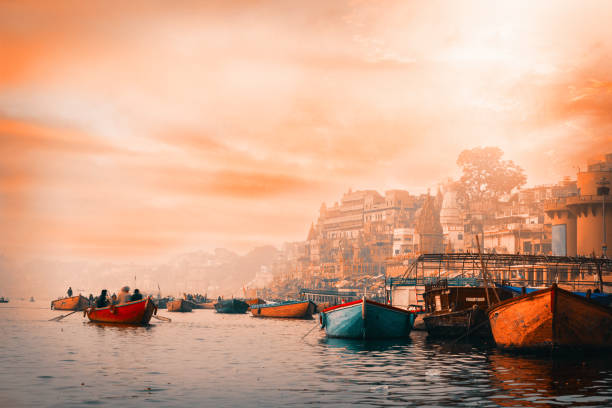
Vrindavan's ghats on the Yamuna particularly Keshi Ghat, Imli Tala, and the Panighat are the waterfront of the sacred town and carry the associations of Krishna's bathing, his play with the cowherd boys, and his famous encounter with the serpent Kaliya at the Kaliyadaman Ghat. The ghats are beautiful at dawn when the light on the river is extraordinary and the sounds of the morning prayers from the surrounding temples drift across the water and in the evening, when the setting sun turns the Yamuna gold. A boat ride on the Yamuna at Vrindavan, gliding past the ghats and their succession of temples, is one of the finest experiences the town offers.
Parikrama Marg (Circumambulation Path)
The sacred practice of Vrindavan Parikrama walking the circumambulation path that encircles the entire town (approximately 10 km) is one of the most important devotional acts that pilgrims perform in Vrindavan. The path passes through all the major sacred groves, temple courtyards, and ghats, and walking it in the early morning, when the pilgrims are chanting and the town is waking, gives a complete and deeply immersive experience of Vrindavan's sacred geography. Our guides lead the Parikrama walk at a pace that allows proper engagement with each site along the route.
Vrindavan's Music & Devotional Culture
Vrindavan is the home of a living tradition of devotional music and dance the kirtan and bhajan traditions that have been continuously practised here since the time of the saint Swami Haridas in the 16th century. The Braj Bhasha songs of the poet-saints Surdas, Mirabai, and Swami Haridas, which describe Krishna's childhood and his love for Radha in language of extraordinary beauty, are sung in Vrindavan's temples and ashrams every morning and evening. The Dhrupad and Haveli Sangeet musical traditions refined in the Vrindavan ashrams over five centuries represent some of the most ancient living strands of Indian classical music. Our packages can include attendance at morning and evening musical puja sessions in the smaller temples, where these traditions are still performed in their most authentic and intimate form.
A Taste of Braj: Divine Satvik Delights
Makhan Mishri: The ultimate offering to Lord Krishna. Freshly churned white butter served with rock sugar and dry fruits, available at almost every temple and sweet shop.
Temple Prasadam: Don't miss the Panjiri (a sweet, ghee-rich wheat flour dish) and Annam Brahm (a massive, daily community feast) served at the ISKCON and other major temples.
Brij Kachori & Jalebi: The ultimate local breakfast. Crispy, deep-fried kachoris paired with sweet, syrupy jalebis, best enjoyed at the famous Brijwasi or Ramlala.
Satvik Thali: A wholesome, comforting platter of fresh dal, seasonal sabzi, puris, and rice, prepared strictly without onion, garlic, or tomatoes, available at local ashrams and restaurants.
Celebrate the Divine: Unforgettable Festivals in Vrindavan
Holi (February / March): Vrindavan celebrates Holi for over 40 days! Witness the world-famous Phoolon wali Holi (flower-throwing festival) at the Banke Bihari Temple, and take a day trip to neighboring Barsana and Nandgaon for the unique, playful Lathmar Holi, where women playfully chase men with sticks.
Janmashtami (August / September): The grand celebration of Lord Krishna’s birth. The entire town stays awake all night, singing bhajans and dancing. The highlight is the midnight Abhishek (holy bath) of the deity at the Krishna Janmabhoomi, followed by the thrilling Dahi Handi (pot-breaking) events across the city.
Radhashtami (August / September): Celebrating the divine appearance of Goddess Radha. The celebrations in Barsana (Radha’s hometown) are unparalleled, featuring massive, joyous processions, grand Bhandara (community feasts), and vibrant cultural programs.
Kartik Purnima & Dev Deepawali (October / November): The holy month of Kartik is considered the most auspicious time in Vrindavan. The town is illuminated with millions of earthen lamps (diyas), and the Yamuna River glows with floating candles during the spectacular evening Aartis.
Jhulan Yatra / Hindola Festival (July / August): A beautiful monsoon festival where intricately decorated swings (jhulas) are installed in temples. The deities of Radha and Krishna are gently swung to the rhythm of traditional folk songs, creating a deeply serene and romantic atmosphere.
Best Time to Visit Vrindavan
Winter (October to March): The finest season. Pleasant temperatures (8°C to 25°C), clear skies, and all temple activities at their most accessible. The Kartik month (October–November) is particularly significant — thousands of pilgrims undertake the Braj Parikrama during this auspicious period, and the entire Braj Bhoomi vibrates with devotional energy.
Holi (March): Vrindavan's Holi is one of India's greatest festival experiences. The Phoolon ki Holi at Banke Bihari Temple (flower Holi, held a week before the main date), the Lathmar Holi at nearby Barsana and Nandgaon, and the main Holi celebration fill the entire Braj region with colour, music, and extraordinary joy. Advance planning is essential our team manages all logistics.
Janmashtami (July/August): Krishna's birthday is celebrated in Vrindavan with the same intensity as in Mathura, with midnight celebrations at all major temples. Enormous crowd volumes require advance coordination.
Summer (April to June): Hot (35°C to 44°C). Early morning and evening visits are manageable. The town is less crowded, and the devotional atmosphere is entirely unchanged by the heat.
Our Most Popular Vrindavan Tour Packages
Mathura Vrindavan Pilgrimage (1–2 Days)
The classic Braj combination. Covers Krishna Janmabhoomi and Dwarkadhish in Mathura, followed by Banke Bihari, ISKCON, Prem Mandir, and Nidhivan in Vrindavan. Includes the Yamuna Aarti and all major darshans.
Same Day Vrindavan Tour from Delhi
India’s most sought-after spiritual day trip. Depart early from Delhi, immerse yourself in Vrindavan’s temple circuit, witness Prem Mandir’s light show, and return by night. Efficient, affordable, and spiritually fulfilling.
Vrindavan Holi Special
Experience the world-famous Phoolon Wali Holi at Banke Bihari where flowers replace colours and the exuberant Huranga at Dauji Temple. This package books out months in advance; we secure accommodation and temple access before the rush.
The Complete Braj Circuit (3–4 Days)
Mathura, Vrindavan, Gokul, Nandgaon, Barsana, and Govardhan. Includes the Govardhan Parikrama, Lathmar Holi (seasonal), and rural Braj experiences. Our most comprehensive Vrindavan holiday package for devotees who want it all.
Vrindavan Spiritual Retreat (5–7 Days)
Stay in an ashram or heritage haveli. Daily temple visits, kirtan participation, sattvic meals, and guided discourses on the Bhagavad Gita and Srimad Bhagavatam. For those seeking transformation, not just travel.
Luxury Vrindavan Experience
Boutique stays with Yamuna views, private temple darshan assistance, curated prasad meals, and personal transport. Spiritual depth meets contemporary comfort.
Our Vrindavan Tour Package Inclusions
1. Accommodation: Carefully selected ashram guesthouses, heritage dharamshalas, and comfortable hotels in and around Vrindavan ranging from simple but clean pilgrim accommodation to more comfortable mid-range properties.
2. Transportation: Private cab from Mathura, Agra, or Delhi; all local sightseeing by vehicle, cycle-rickshaw, and on foot within the town.
3. Temple Circuit: Expert-guided visits to Banke Bihari Temple, Radha Raman Temple, ISKCON Temple, Prem Mandir, Govind Dev Temple, Madan Mohan Temple, and Nidhivan-Seva Kunj.
4. Sacred Experiences: Yamuna boat ride at dawn, Vrindavan Parikrama morning walk, evening aarti attendance at Keshi Ghat, and bhajan/kirtan session at a traditional ashram.
5. Festival Packages: Holi and Janmashtami special packages with prime temple positioning, crowd management, and complete festival logistics.
6. Mathura Circuit: All Vrindavan packages are designed for seamless combination with Mathura (12 km) together forming the complete Braj Bhoomi pilgrimage circuit.
7. Meals: Breakfast included; temple prasad experiences at major temples; Vrindavan's pure vegetarian cuisine no meat, no eggs, no onion or garlic at traditional establishments.
8. 24/7 Support: Our Braj Bhoomi team is always reachable throughout your visit.
Popular Vrindavan Itineraries
1 Night / 2 Days – Vrindavan Essentials: Banke Bihari Temple morning darshan, Radha Raman Temple, ISKCON Temple, Prem Mandir (day and illuminated evening), Nidhivan, Keshi Ghat evening aarti, and Yamuna boat ride at dawn.
2 Nights / 3 Days – Complete Vrindavan: Adds Govind Dev Temple, Madan Mohan Temple, Seva Kunj, morning Vrindavan Parikrama walk, kirtan session at a traditional ashram, and unhurried exploration of the forest groves.
Mathura + Vrindavan Circuit (2–3 nights): The natural combination covering both birth city and childhood playground of Lord Krishna the complete Braj Bhoomi sacred geography in one seamlessly organised journey.
Braj Parikrama (4–5 nights): The extended sacred circuit covering Mathura, Vrindavan, Govardhan Hill, Barsana (Radha's birthplace), Nandgaon (Krishna's foster father's village), and Gokul (where Krishna spent his earliest childhood) the complete Braj Mandal pilgrimage.
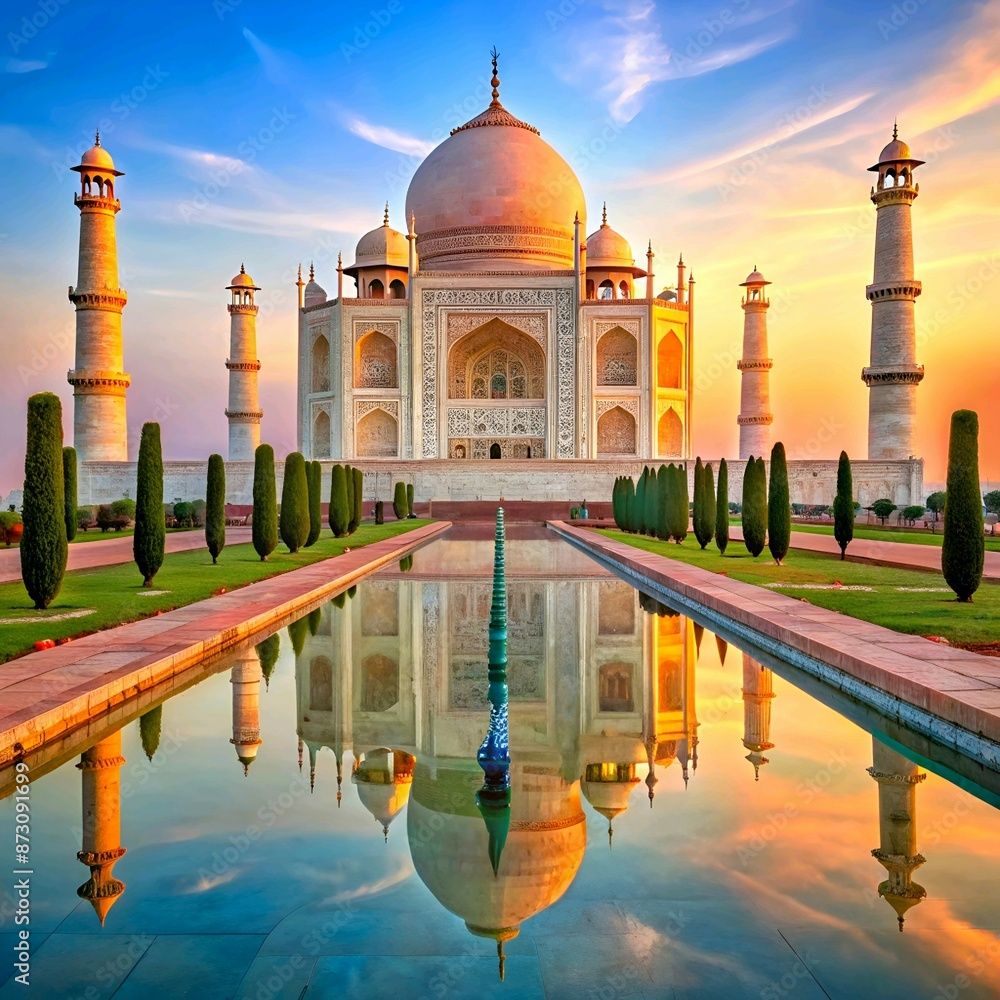
Agra + Mathura + Vrindavan (4 nights): The most popular Uttar Pradesh combination the architectural magnificence of Agra's Taj Mahal followed by the devotional intensity of the Braj Bhoomi.
Practical Travel Information
How to Reach Vrindavan?
- By Train: Mathura Junction Railway Station (12 km from Vrindavan) is the nearest railhead, well-connected to Delhi (2 hours), Agra (1 hour), and all major cities. Auto-rickshaws and taxis connect Mathura to Vrindavan in 20–30 minutes.
- By Road: Vrindavan is approximately 150 km from Delhi (2.5–3 hours on the Yamuna Expressway), 12 km from Mathura, and 70 km from Agra.
Local Travel Tips:
- Vrindavan is strictly vegetarian no meat, fish, or eggs are available anywhere in the town. The food is excellent and the tradition of pure sattvic (spiritually clean) cooking produces some of the finest simple vegetarian food in India.
- Visit the Banke Bihari Temple during the early morning darshan (7–8 AM) or the evening darshan (5–7 PM) for the most intense atmosphere but be prepared for significant crowds at both times.
- Dress very conservatively in Vrindavan this is one of the most devout towns in India, and shorts, sleeveless tops, and revealing clothing are deeply inappropriate and disrespectful.
- Monkeys are abundant throughout Vrindavan and are bold keep food and loose items secure.
- The Yamuna River at Vrindavan is heavily polluted ritual bathing is practised by pilgrims but swimming is not advisable for health reasons.
Why Choose Our Vrindavan Tour Packages?
- Carefully planned itineraries covering Vrindavan's most important temples and attractions.
- Comfortable hotel accommodations for every budget.
- Flexible and customizable travel packages.
- Expert assistance for temple visits and sightseeing.
- Transparent pricing with no hidden charges.
- Hassle-free transportation and travel arrangements.
- Ideal for pilgrims, families, senior citizens, and groups.
- Easy combinations with Mathura, Agra, and other nearby destinations.
Plan Your Vrindavan Trip with Vayable Trip
Discover the spiritual charm and timeless devotion of Vrindavan with our thoughtfully crafted tour packages. Whether you're seeking a pilgrimage experience, a family vacation, or a cultural journey, our packages are designed to help you explore the best of this sacred destination with comfort and convenience.
At Vayable Trip, we take care of every aspect of your journey, from accommodation and transportation to sightseeing and local assistance, ensuring a seamless and memorable experience.