8988133331
Home/Packages/ Telangana Tour Packages
Destination
Where To?
Check-in
Check-out
Guests

1 R. 2 Ad. 0 Ch.

Telangana Tour Packages

From the royal grandeur of Hyderabad and the timeless beauty of Golconda Fort to ancient temples, scenic lakes, waterfalls, forests, and vibrant local culture, Telangana is one of South India’s most fascinating and underrated travel destinations. Our Telangana Tour Packages are carefully designed to help travellers experience the perfect blend of history, spirituality, architecture, cuisine, wildlife, and modern attractions across the heart of the Deccan Plateau. Whether you want to explore UNESCO heritage sites, enjoy authentic Hyderabadi biryani, visit sacred pilgrimage centres, or discover hidden natural escapes, Telangana offers unforgettable experiences for every type of traveller.

The state is home to magnificent Kakatiya temples, centuries-old forts, bustling pearl markets, handloom weaving villages, wildlife sanctuaries, and iconic attractions like Ramoji Film City and Ramappa Temple. From relaxing family holidays and spiritual journeys to heritage tours and weekend getaways from Hyderabad, Telangana promises a rich cultural journey filled with warm hospitality, colourful festivals, and unforgettable memories at every step.

Why Telangana is One of India’s Best Travel States

Telangana is one of India’s most fascinating travel destinations, offering a rich combination of royal heritage, ancient temples, scenic landscapes, wildlife, vibrant festivals, and world-famous cuisine. From the historic streets of Hyderabad to UNESCO heritage sites, waterfalls, forests, and spiritual centres, the state delivers unforgettable experiences for every kind of traveller.

1. Royal Heritage & Historic Monuments – Explore iconic landmarks like Charminar, Golconda Fort, and centuries-old palaces of the Nizams.

2. UNESCO Heritage Sites – Visit the magnificent Ramappa Temple, one of India’s finest examples of Kakatiya architecture.

3. World-Famous Food Culture – Telangana is home to legendary dishes like Hyderabadi Biryani, Haleem, Irani Chai, Gongura Pachadi, and traditional Telugu cuisine.

4. Spiritual & Pilgrimage Tourism – Discover sacred destinations like Yadadri Temple and Sri Sita Ramachandra Swamy Temple.

5. Nature, Lakes & Waterfalls – Enjoy scenic escapes at Laknavaram Lake, Kuntala Waterfall, and forested hill regions.

6. Wildlife & Eco Tourism – Explore tiger reserves, sanctuaries, and forest landscapes across the Deccan region.

7. Modern Attractions & Entertainment – Visit Ramoji Film City, the world’s largest film studio complex and one of India’s top family attractions.

8. Perfect for Every Traveller – Telangana offers heritage tours, family holidays, spiritual journeys, weekend getaways, honeymoon trips, and adventure experiences all in one state.

Top Tourist Attractions to Explore in Telangana Holiday Packages

1. Hyderabad- City of Pearls, Biryani, and the Nizams

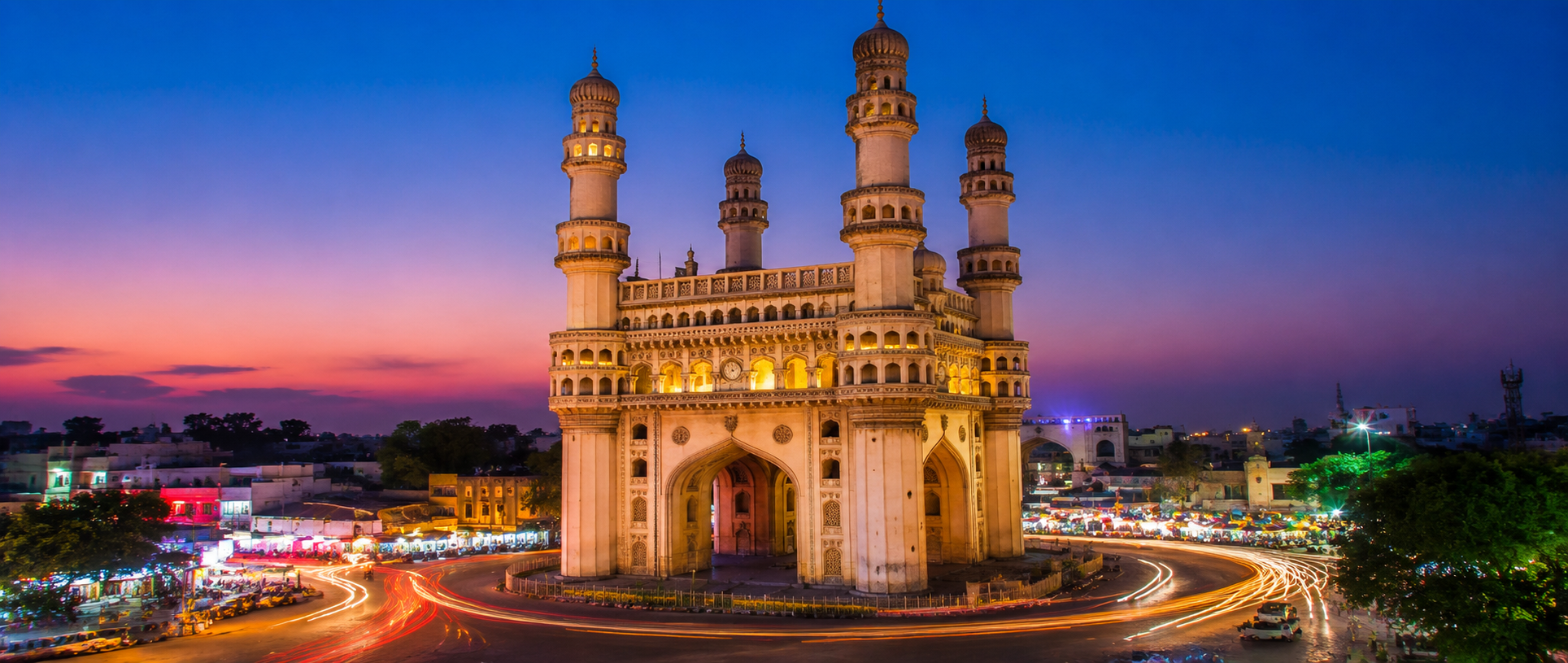
Hyderabad is the joint capital of Telangana and Andhra Pradesh a city of 10 million people on the Deccan Plateau that carries the most layered and distinctive urban character of any city in South India. The Nizams of Hyderabad, who ruled from 1724 to 1948 as the wealthiest royal family in the world (the last Nizam, Mir Osman Ali Khan, had a personal fortune estimated at $236 billion in today's terms), left behind a city of extraordinary architectural ambition: the Charminar (1591), the Mecca Masjid (one of the largest mosques in India, capable of holding 10,000 worshippers), the Golconda Fort (a 16th-century diamond-trading citadel with a sophisticated acoustic signalling system), the Falaknuma Palace (the Nizam's finest guest palace, now a Taj hotel), and the Salar Jung Museum (one of the world's finest collections of decorative art, assembled by a single man). Hyderabad is also the City of Pearls the largest pearl trading centre in the world, where the Nizams' tradition of pearl jewellery and the Hyderabadi half-set have made the Laad Bazaar near Charminar the most important pearl market in Asia. The Hyderabadi biryani the dum-cooked rice and meat preparation developed in the Nizam's royal kitchens is the most celebrated biryani in India and is the food by which the city defines itself.

Best Time to visit- October to March (comfortable Deccan plateau weather) · November to February (finest season cool evenings, all monuments accessible) · avoid April to June (extreme heat, 40–44°C) · Monsoon July to September,manageable in the city but hot.

Places to Visit- Charminar · Golconda Fort · Salar Jung Museum · Laad Bazaar · Falaknuma Palace · Mecca Masjid · Hussain Sagar · Qutb Shahi Tombs · Birla Mandir

What to Eat- Hyderabadi Dum Biryani · Haleem (slow-cooked wheat and mutton, the Hyderabad Haleem has a GI tag) · Nihari · Osmania Biscuits (the crumbly Nizam-era tea biscuit) · Irani Chai at the old city's traditional cafés · Qubani ka Meetha (apricot dessert) · Sheer Korma.

Top Things To Do

  • Charminar at dawn- the 1591 four-minaret gateway before 7 AM when it is quiet and the morning light falls on the old city below.
  • Laad Bazaar pearl market- the bangles, pearls, and Hyderabadi half-set jewellery market at the base of Charminar; buy direct from the pearl dealers.
  • Golconda Fort acoustic demonstration- the hand-clap at the entrance gate is audible at the highest baradari 300 metres away; the fort's whispering gallery system.
  • Salar Jung Museum- the world's largest one-man-collected art museum; the Veiled Rebecca marble sculpture and the Mughal jade collection.
  • Falaknuma Palace heritage dinner- the Nizam's finest palace now a Taj hotel; dinner on the premises is available to non-guests by advance booking.
  • Charminar biryani trail- the old city's biryani restaurants (Hotel Shadab, Bawarchi, and Paradise) are all within 2 km of the Charminar. 

2. Golconda Fort- The Diamond Kingdom of the Deccan

Golconda Fort is one of the most impressive military fortifications in India, a 16th-century citadel of the Qutb Shahi dynasty spread across a 120-metre-high granite hill on the western outskirts of Hyderabad, with 8 kilometres of defensive walls, 87 semicircular bastions, 8 gateways, and an interior complex of palaces, mosques, water storage systems, and the famous acoustic system that could carry the sound of a hand-clap from the entrance gate to the highest pavilion in 3 seconds. Golconda was the centre of the world's diamond trade from the 15th to the 17th century the Koh-i-Noor, the Hope Diamond, the Regent Diamond, and the Nassak Diamond all originated in the mines of the Golconda kingdom, which controlled the only significant diamond deposits in the pre-South American world. The fort complex includes the magnificent Ibrahim Durbar (audience hall), the royal palaces, the Bala Hisar (upper fort), and the adjacent Qutb Shahi Tombs, the necropolis of the 7 Qutb Shahi rulers whose domed granite mausoleums are among the finest examples of Indo-Islamic funerary architecture in India.

Best Time to visit- October to March (comfortable fort climbing weather) · Dawn visit recommended the fort at 7 AM before the day-trippers arrive from Hyderabad is a completely different experience · Sound-and-light show: evenings year-round (check times)

Places to Visit- Golconda Fort · Bala Hisar · Fateh Darwaza · Qutb Shahi Tombs · Ibrahim Durbar · Rani Mahal · Taramati Baradari (nearby).

What to Eat- Hyderabad old city food near Golconda the restaurants around the fort area serve authentic Hyderabadi Muslim cuisine · Biryani at the local dhabas outside the fort gate · Sherbet and fresh lime soda at the fort entrance stalls · Irani Chai at the old city cafes.

Top Things To Do

  • Acoustic demonstration at Fateh Darwaza- the hand-clap at the main entrance gateway heard at the Bala Hisar pavilion 300 metres and 120 metres higher.
  • Bala Hisar climb- the upper fort complex with the finest view of Hyderabad and the surrounding Deccan from the highest pavilion.
  • Qutb Shahi Tombs (adjacent)- the 7 domed mausoleums of the dynasty in a formal garden; recently restored and extraordinarily photogenic.
  • Persian wheel water system- the 16th-century hydraulic system that lifts water 62 metres through the granite hill using gravity.
  • Ibrahim Durbar (audience hall)- the royal ceremonial hall with the remains of its tile work and the acoustic design.
  • Evening sound-and-light show- the fort's history narrated as the walls are illuminated; book tickets in advance.

3. Warangal- The Kakatiya Capital

Warangal was the capital of the Kakatiya dynasty (1163–1323 CE) one of the most culturally productive kingdoms in medieval Deccan history, responsible for the Warangal Fort, the Thousand Pillar Temple, the Ramappa Temple (now a UNESCO World Heritage Site), and the distinctive Kakatiya sculptural style that influenced temple art across the Deccan for two centuries. The Ramappa Temple (officially Sri Ramalingeswara Swamy Temple), 77 kilometres from Warangal, was built in 1213 CE by the Kakatiya general Recharla Rudra and is the only temple in India named after its architect rather than its deity a recognition that even contemporaries understood the building's extraordinary quality. The temple's floating bricks (made with a material light enough to float on water possibly pumice or foamed clay), its extraordinary black basalt sculpture, and its distinctive Kakatiya star-shaped platform make it one of the finest examples of medieval Deccan architecture. The Warangal Fort whose 4 ornamental gateways (toranas) are the finest Kakatiya sculptural monuments remaining in Telangana and the Thousand Pillar Temple give Warangal a heritage density second only to Hyderabad in the state.

Best Time to visit- October to March (comfortable heritage visiting) · November to February (finest weather for the outdoor Warangal Fort and Ramappa Temple) · avoid April to June (extreme Deccan heat).

Places to Visit- Ramappa Temple (UNESCO) · Warangal Fort · Thousand Pillar Temple · Pakhal Lake · Warangal Museum · Eturnagaram Wildlife Sanctuary · Bhadrakali Temple.

What to Eat- Warangal's Telugu cuisine · Gongura Pachadi (sorrel leaf chutney) · Jonna Roti (sorghum flatbread) · Pesarattu · Warangal's famous Boorelu (sweet stuffed lentil fritter).

Top Things To Do

  • Ramappa Temple (UNESCO)- the 1213 CE Kakatiya masterpiece; the Nayika bracket figures, the floating bricks, and the black basalt sculpture.
  • Warangal Fort ornamental gateways (Kalachakra Toranas)- the four decorated gateway arches that remain from the 13th-century fort complex.
  • Thousand Pillar Temple- the 12th-century Shiva-Vishnu-Surya trikuta temple with carved pillars in the Kakatiya tradition.
  • Pakhal Lake- the Kakatiya-era reservoir 50 km from Warangal; the lake-forest setting and the wildlife (leopard and gaur in the adjoining sanctuary).
  • Warangal Museum- the Kakatiya sculptural collection including the finest pieces from the fort complex.
  • Eturnagaram Wildlife Sanctuary- the forest reserve adjacent to the Pakhal lake area; tiger, leopard, and wild dog.

4. Nagarjuna Sagar- Buddhist Heritage and the Great Dam

Nagarjuna Sagar straddles the Telangana-Andhra Pradesh border on the Krishna River a vast reservoir created by one of the world's largest masonry dams (the Nagarjuna Sagar Dam, completed 1967) that submerged the ancient Buddhist city of Nagarjunakonda. The island museum that now preserves the relocated monuments of Nagarjunakonda on a hill surrounded by the reservoir is one of the most unusual heritage sites in India — an entire ancient city lifted from its original location and reassembled on an artificial island created by the rising waters. The Buddhist university and pilgrimage complex of Nagarjunakonda (2nd to 4th century CE) was one of the most significant in ancient South Asia, with monasteries, stupas, temples, and a royal bath house that attracted scholars and pilgrims from Sri Lanka, China, and Central Asia. The island museum visit by boat is the only way to access the monuments, and the combination of the reservoir crossing, the archaeological treasures, and the pastoral Deccan landscape gives the experience a quality of discovery rare in more tourist-developed heritage circuits.

Best Time to visit- October to March (dam visit and island boat comfortable) · October to November (post-monsoon reservoir at maximum level, most dramatic) · avoid April to June (extreme heat in the Krishna Valley).

Places to Visit- Nagarjuna Sagar Dam · Nagarjunakonda Island Museum · Ethipothala Falls · Krishna River Gorge · Yadagirigutta Temple · Nalgonda.

What to Eat- Nalgonda district Telugu food (the Krishna Valley cuisine rice, lentils, and the distinctive Nalgonda-area tamarind preparations) · Pesarattu · Gongura Pachadi · Fish curry from the Krishna River · Simple Deccan Thali at the dam-side restaurants.

Top Things To Do

  • Nagarjunakonda Island boat trip- the morning ferry from the dam site to the island museum; the 30-minute crossing over the blue reservoir.
  • Island museum monument circuit-  the 30 relocated Buddhist structures including stupas, monastic halls, and the Ikshvaku-period sculptures.
  • Nagarjuna Sagar Dam viewpoint- one of the world's largest masonry dams; the view of the reservoir and the flood gates.
  • Ethipothala Falls (21 km)- the 70-foot waterfall with the marsh crocodile pool; the falls at post-monsoon peak are extraordinary.
  • Krishna River gorge boat- the gorge below the dam where the river narrows dramatically.
  • Yadagirigutta Narasimha Temple (90 km)- the Vaishnavite cave temple complex on a hilltop that is Telangana's most visited pilgrimage site outside Hyderabad.

5. Nizamabad & Pochampally- Ikat Weaving and the Northern Deccan

Pochampally village, 50 kilometres from Hyderabad on the Nalgonda road, is the centre of the Telangana ikat weaving tradition a double-ikat silk and cotton textile whose geometric patterns (diamond grids, chevrons, and the distinctive Pochampally check) have been produced on handlooms in this village and its surroundings for over 300 years. Pochampally ikat has a GI tag, a UNESCO recognition as an Intangible Cultural Heritage, and an international market that sells in Tokyo, Milan, and New York yet the weavers who produce it still work on pit looms in their home workshops using resist-dyeing techniques whose precision requires skills that take a decade to master. The village is simultaneously a living workshop and a heritage site the weaving families welcome visitors (particularly those who make advance arrangements) and the process of tying, dyeing, and weaving the ikat patterns can be observed at every stage. Nizamabad, 172 kilometres north of Hyderabad, is the town that gives its name to the distinctive Nizamabad black lacquerware a craft that uses a natural black lacquer to coat silver-inlaid wooden objects in a tradition that dates to the Nizam period.

Best Time to visit- Year-round (weaving continues in all seasons) · October to March (comfortable travel weather for the Deccan) · Festival weaving (October to January — the finest patterns produced for Dussehra and Diwali gifting season).

Places to Visit- Pochampally Village · Koyyalagudem · Choutuppal · Yadagirigutta Temple · Nizamabad · Nalgonda · Bhongir Fort.

What to Eat- Nalgonda-area Telugu Thali · Pesarattu with ginger chutney · Gongura Pachadi · Sajja Roti (pearl millet flatbread) · Bobbattu (sweet stuffed flatbread) · Pachi Pulusu (cold tamarind rasam) · Local Deccan rice beer at the weaver family's home.

Top Things To Do

  • Pochampally master weaver workshop- the double-ikat process from thread tying to dyed thread alignment to weaving on the pit loom.
  • Direct purchase from the weaver- the finest Pochampally ikat at the source, without the retail markup.
  • Warp and weft dyeing demonstration- the pre-dyeing of threads before weaving that creates the ikat bleed pattern.
  • Adjacent weaving village circuit- Koyyalagudem and Choutuppal have slightly different pattern traditions from Pochampally proper.
  • Nizamabad black lacquerware workshop- the silver-inlaid black lacquer craft of the Nizamabad artisans (170 km from Hyderabad).
  • Yadagirigutta Narasimha Temple (50 km from Pochampally)- the most significant Vaishnavite cave temple complex in Telangana.

6. Medak- The Largest Diocese Church in Asia

Medak is a small town 100 kilometres north of Hyderabad that contains one of the most architecturally extraordinary and least-known structures in South India, the Medak Cathedral, built between 1914 and 1924 by Indian Christians working under Methodist missionary direction, whose gothic spire rises 58 metres above the Deccan plateau and whose stained glass windows (32 of them, each depicting a scene from the life of Christ) are the finest collection of stained glass in India. The cathedral was built by Indian craftsmen using local granite and lime mortar without any structural steel, and its capacity (5,000 worshippers, the largest congregation of any church in Asia) reflects the extraordinary growth of Christianity in this part of the Deccan during the colonial period. The Medak Fort (16th century, Qutb Shahi period) on a prominent granite hill above the town gives a panoramic view of the Deccan plateau, and the Pocharam Lake Sanctuary nearby shelters flamingo colonies in winter.

Best Time to visit-  Year-round (cathedral open daily) · Sunday morning (mass attendance makes the cathedral most alive) · November to February (Pocharam flamingos, comfortable day-trip weather).

Places to Visit- Medak Cathedral · Medak Fort · Pocharam Lake Sanctuary · Ameenpur Lake · Ramayampet · Sangareddy.

What to Eat- Medak has simple Telugu food at the town restaurants · Pesarattu · Jonnalu (sorghum) preparations · Gongura · Cathedral canteen food on Sundays (South Indian Christian community cooking rice, lentil curry, and the distinctive Christian community fish and meat preparations) · Return to Hyderabad for the main meal

Top Things To Do

  • Medak Cathedral interior- the 32 stained glass windows depicting Christ's life; the cathedral at Sunday morning mass with 5,000 worshippers.
  • Cathedral spire view (58 m)- the finest view of the Medak Deccan plateau from the top of the structure.
  • Medak Fort (16th century)- the Qutb Shahi fort on the granite outcrop above the town; the view of the cathedral from the fort is the finest double-heritage view in Telangana.
  • Pocharam Lake Sanctuary (30 km)- flamingo colonies in winter (November to February) and year-round resident waterbirds.
  • Cathedral construction history- the story of how Indian craftsmen built the largest cathedral in Asia without structural steel using local granite.
  • Medak town market- the traditional weekly market with the Deccan craft and produce tradition.

7. Khammam & Bhadrachalam- The Ramayana Forest and River

Bhadrachalam, 310 kilometres from Hyderabad in the Khammam district on the banks of the Godavari River, is one of the most significant Vaishnavite pilgrimage sites in Telangana, the Bhadrachalam Temple (17th century) is believed to mark the spot where Lord Ram, Sita, and Lakshman lived during their forest exile, and the surrounding area is identified by the local tradition as Dandakaranya, the forest described in the Ramayana. The Godavari River at Bhadrachalam is still pristine — the river's upper reaches before the Telangana plains are reached is clean, clear, and surrounded by the Papikonda Hills whose forests are part of a wildlife corridor connecting the Nallamala forest in Andhra Pradesh. The Godavari Pushkaram festival (held every 12 years) draws millions of pilgrims to the river at Bhadrachalam in one of the largest gatherings in Telangana's cultural calendar. The tribal communities of the Khammam district the Koya and Gondi peoples whose forest management practices and material culture are distinct from the Deccan plateau communities give the area an anthropological depth beyond its spiritual significance.

Best Time to visit- October to March (comfortable pilgrimage and forest travel) · Ram Navami (March/April), the most significant festival at Bhadrachalam, extraordinary celebrations on the Godavari bank · Godavari Pushkaram (every 12 years) next major gathering.

Places to Visit- Bhadrachalam Temple · Godavari River · Papikonda National Park · Kinnerasani Wildlife Sanctuary · Koya Village · Dummugudem · Khammam.

What to Eat- Bhadrachalam temple prasad (rice preparations and laddoo distributed at darshan) · Godavari River fish curry (the Godavari mahseer is a local delicacy) · Tribal Koya community food (wild forest preparations, bamboo rice, and mahua flower dishes) · Deccan Thali at Bhadrachalam town restaurants.

Top Things To Do

  • Bhadrachalam Temple dawn darshan- the Vaishnavite temple on the Godavari bank at 5 AM before the main pilgrim queues.
  • Godavari River sunrise boat- the river at dawn from the Bhadrachalam ghat; the forest hills on both banks.
  • Papikonda National Park boat journey- the gorge section of the Godavari through the forest corridor; best for wildlife sightings.
  • Koya tribal village walk- the forest-dwelling Koya community in the Khammam hills with a community liaison.
  • Kinnerasani Wildlife Sanctuary jeep safari- tiger and wild dog in the southern Telangana forest.
  • Ram Navami festival (March/April)- the annual celebration of Ram's birthday at the temple with the Godavari bank illuminated.

8. Nalgonda & Suryapet- The Deccan Heritage Circuit

The Nalgonda and Suryapet districts of central Telangana contain a remarkable concentration of medieval heritage sites that most travellers pass through on the way to Nagarjuna Sagar without stopping a mistake, because the Panagal Temple (12th century Kakatiya), the Nagunur Fort (15th century Bahmani), the Kolanupaka Temple complex (8th century Chalukya), and the Bhongir Fort (one of the finest rock fortifications in the Deccan, built on a single granite outcrop visible from 30 kilometres) represent four distinct medieval dynasties in a single day's driving. Bhongir Fort 50 kilometres from Hyderabad on the highway to Warangal — sits atop a 500-metre granite boulder that rises almost vertically from the flat Deccan plain; the 1.5-kilometre climb to the summit is moderately difficult but rewards with a 360-degree view of the Deccan that extends to the horizon in every direction.

Best Time to visit- October to March (fort climbing comfortable) · November to February (clearest Deccan visibility from the Bhongir Fort summit) · Dawn visit to Bhongir Fort (before the heat builds at the exposed granite summit)

Places to Visit- Bhongir Fort · Kolanupaka Temples · Panagal · Nagunur Fort · Nalgonda · Suryapet · Yadagirigutta Temple.

What to Eat- Nalgonda-area Telugu Thali · Pesarattu with tomato chutney · Gongura Pachadi · Jonnalu Roti · Local rice varieties · Ragi Sangati (finger millet porridge) · Return to Hyderabad for the full biryani experience. 

Top Things To Do

  • Bhongir Fort summit climb (1.5 km)- the granite rock fort visible from 30 km; the 360-degree Deccan view from the summit.
  • Kolanupaka Temple complex- the 8th-century Chalukya temple with the finest Kakatiya bronze collection in Telangana.
  • Panagal Temple (Nalgonda)- the 12th-century Kakatiya temple with fine sculptural decoration.
  • Nagunur Fort (Suryapet)- the 15th-century Bahmani fortification in a rural setting rarely visited.
  • Deccan plateau agricultural landscape drive- the drive from Hyderabad through the Nalgonda district.
  • Suryapet local market- the weekly haat with the rural Telugu community's produce and craft.

9. Ramoji Film City- World’s Largest Film Studio Complex

Ramoji Film City, located 40 kilometres from Hyderabad, is the largest integrated film studio complex in the world and one of the most visited entertainment destinations in India. Spread across more than 2,000 acres, the film city was established in 1996 by media entrepreneur Ramoji Rao and today functions as a complete cinematic universe containing film sets, gardens, hotels, amusement parks, live-action shows, and production studios. Recognised by Guinness World Records as the world’s largest film studio complex, Ramoji Film City has hosted the shooting of thousands of Indian films across Hindi, Telugu, Tamil, Malayalam, and international cinema. The complex is designed like a self-contained city where visitors can explore replicas of airports, railway stations, palaces, European streets, Mughal gardens, temples, urban skylines, and royal courts all built as permanent movie sets. Beyond cinema, Ramoji has evolved into one of South India’s premier family tourism destinations with adventure zones, themed entertainment, bird parks, eco gardens, and large-scale festival celebrations throughout the year.

Best Time to visit- October to March (pleasant weather for full-day exploration) · November to February (coolest and most comfortable season) · Summer April to June can be hot during afternoon outdoor shows · Festive season and winter holidays are the liveliest periods with decorations and events.

Places to Visit- Movie Sets · Bahubali Set · Eureka Theme Park · Fundustan Kids Zone · Japanese Garden · Butterfly Park · Bird Park · Action Studio · Ramoji Tower · Eco Zone · Filmi Duniya.

What to Eat- Hyderabadi Biryani · South Indian meals · Mughlai cuisine · Street snacks inside the theme zone · Ice creams and desserts · Multi-cuisine buffet restaurants · Traditional Telugu meals · Fast food courts throughout the complex.

Top Things To Do

  • Studio tour bus ride- the guided tour through the famous movie sets including airports, palaces, London streets, railway stations, and royal courts used in Indian cinema.
  • Bahubali film set experience- explore the massive Mahishmati kingdom set built for the blockbuster Bahubali films, one of the biggest attractions in the complex.
  • Live stunt and action shows- cinematic stunt performances, wild-west action scenes, and special-effects demonstrations throughout the day.
  • Eureka Theme Park- carnival rides, adventure attractions, musical performances, and family entertainment activities inside the themed zone.
  • Bird Park and Butterfly Garden- exotic bird species, landscaped gardens, and photography-friendly nature spaces inside the studio complex.
  • Night stay inside Film City- luxury and themed hotels within the complex allow visitors to experience the film city after day tourists leave.

Adventure Activities To Do During Your Telangana Tour

Telangana is not just about heritage monuments and royal history the state also offers a wide range of adventure experiences for nature lovers, trekkers, wildlife enthusiasts, and road-trip travellers. From fort trekking and forest camping to boating, wildlife safaris, waterfall exploration, and eco-tourism activities, Telangana’s rugged Deccan landscapes provide exciting outdoor experiences throughout the year. Whether you want peaceful lakeside adventures, scenic hill trails, or thrilling jungle excursions, Telangana has something for every adventure seeker.

1. Fort Trekking at Bhongir Fort – Climb the massive granite hill fort for panoramic views of the Deccan Plateau and one of Telangana’s most exciting heritage treks.

2. Trekking & Camping in Ananthagiri Hills – Explore forest trails, sunrise viewpoints, camping sites, and scenic hill landscapes near Hyderabad.

3. Boating at Laknavaram Lake – Enjoy boating across the beautiful lake connected by Telangana’s famous suspension bridge surrounded by forested islands.

4. Waterfall Exploration at Kuntala & Bogatha Waterfall- Discover Telangana’s most spectacular waterfalls during the monsoon and post-monsoon seasons.

5. Wildlife Safaris in Kawal Tiger Reserve – Experience jeep safaris, birdwatching, and forest adventures in Telangana’s premier tiger reserve.

6. Godavari River Boat Rides in Bhadrachalam – Enjoy scenic river cruises through forested landscapes and the beautiful Papikonda hill region.

7. Rock Climbing & Nature Trails – Telangana’s granite landscapes around Hyderabad and the Deccan region are ideal for rock climbing, hiking, and outdoor exploration.

8. Birdwatching & Eco Tourism – Visit Pocharam Lake, Pakhal Lake, and other wetland regions for migratory birds, nature photography, and eco-tourism experiences.

9. Adventure Activities at Ramoji Film City – Enjoy adventure rides, live stunt performances, zipline activities, and family entertainment experiences.

Telangana's Food- One of India's Great Culinary Traditions

Telangana's food culture is anchored in the extraordinary Hyderabadi cooking tradition, a cuisine that evolved at the Nizam's courts through the intersection of Mughal, Persian, Arabic, and Telugu culinary traditions, producing dishes of unparalleled richness and sophistication.

1. Hyderabadi Biryani- The dish that made the city famous across the world. Made using the dum pukht technique marinated meat layered with partially cooked saffron rice in a sealed vessel and slow-cooked over charcoal, the Hyderabadi biryani produces an experience of layered flavor and fragrance that no other biryani tradition quite replicates. Popular eateries like Paradise, Shah Ghouse, and Bawarchi are great places to sample authentic Hyderabadi biryani. The debate between kachchi biryani (raw meat cooked with rice simultaneously) and pakki biryani (pre-cooked meat layered with rice) is Hyderabad's great culinary disagreement, and both traditions produce outstanding results.

2. Haleem- Perhaps Hyderabad's most complex dish, a slow-cooked preparation of wheat, lentils, and meat (traditionally mutton) that is cooked for up to 12 hours until the ingredients become a unified, intensely flavored mass of extraordinary depth. Haleem is a Ramadan specialty in Hyderabad and at its finest during this period, when hundreds of haleem vendors appear across the city. Haleem is especially associated with Ramadan. Hyderabadi haleem received a Geographical Indication (GI) tag in 2010 — the first meat product in India to receive this designation.

3. Irani Chai- The defining beverage of old Hyderabad a strong, milky tea brewed in the Iranian style in the city's famous Irani cafés, served with Osmania biscuits (a slightly sweet, buttery biscuit unique to Hyderabad). The Irani cafe culture with its marble-topped tables, mismatched chairs, and the particular quality of a chai that has been brewing since before you arrived is one of Hyderabad's most authentic and most democratic culinary experiences. The aroma of Hyderabadi Biryani and Irani chai at Mughlai restaurants softly settles in the hearts of food lovers.

4. Kebabs- Hyderabad's kebab tradition is a direct descendant of the Mughal court's sophisticated approach to grilling. The Pathar ka Gosht (meat grilled on a heated stone slab), the Shikampuri kebab (minced meat stuffed with yogurt), and the Boti kebab (marinated lamb pieces grilled over coals) are all uniquely Hyderabadi preparations.

5. Qubani ka Meetha- A must-try dessert that perfectly embodies the essence of Hyderabad's culinary tradition. Dried apricots (qubani) stewed in sugar syrup and served with fresh cream or custard it is simultaneously simple and extraordinary, and available at every traditional Hyderabadi restaurant and wedding feast.

6. Double ka Meetha- Hyderabad's bread-based dessert fried bread soaked in reduced milk, sugar, and saffron, garnished with dry fruits. The name comes from the bread's original name (double roti referring to the double-risen bread) and the sweetness (meetha) that transforms it.

7. Mirchi ka Salan- A rich peanut and sesame-based gravy cooked with green chilies, served as the traditional accompaniment to biryani. The combination of the biryani's delicate rice and this fiery, tangy, nutty sauce is one of Telangana's most essential flavor pairings.

8. Sarva Pindi and Pesarattu- The traditional Telangana home breakfast: Sarva Pindi is a thick rice flour pancake cooked with groundnuts, green chilies, and cumin, crispy on the outside, soft within. Pesarattu is a green moong dal crepe, served with ginger chutney. These are the everyday foods of Telugu households and available at local tiffin centers across the state at exceptional quality and minimal cost.

Shopping Experience in Telangana

Shopping in Telangana is a colourful blend of royal heritage, traditional craftsmanship, and vibrant local culture. From the bustling bazaars of Hyderabad to the famous weaving villages of Pochampally, the state offers a unique shopping experience filled with handcrafted treasures, textiles, jewellery, and cultural souvenirs. Whether you are exploring heritage markets or modern shopping streets, Telangana is a paradise for shoppers looking for authentic Deccan artistry.

The iconic Laad Bazaar near Charminar is famous for its traditional bangles, pearls, bridal jewellery, perfumes, and handicrafts, while Hyderabad’s pearl markets continue the city’s centuries-old reputation as the “City of Pearls.” Travellers can also shop for the world-famous Pochampally Ikat sarees and handloom fabrics in Pochampally, along with Bidriware crafts, Nirmal paintings, lacquerware, silver jewellery, and traditional Telugu handicrafts that reflect Telangana’s rich artistic heritage.

Telangana's Festivals- Worth Planning Your Entire Trip Around

Bathukamma (September–October)

Telangana's most distinctive and most beloved festival, a flower festival celebrated primarily by women over nine days during the Navratri period. Bathukamma means "the goddess who is alive" cone-shaped floral arrangements are made from seasonal wildflowers and carried to ponds and water bodies by women singing traditional songs, then floated on the water in a communal ritual of extraordinary beauty. Bathukamma is the festival that most distinguishes Telangana's culture from its neighbors and is the most visually extraordinary celebration in the Deccan.

Bonalu (July–August)

A Hyderabad festival of the goddess Mahankali, where women carry Bonam (food offering pots decorated with neem leaves and turmeric) on their heads in procession to the goddess's temples. The Golconda Fort's Mahankali Temple and the Lal Darwaza Simhavahini Mahakali Temple are the primary centers of celebration. The processions, the temple rituals, and the sheer communal energy of Bonalu make it one of Hyderabad's most authentic cultural experiences for visitors.

Deccan Festival (February)

A government-organized celebration of Hyderabadi culture at Hyderabad's Lal Qila, five days of classical music, ghazals, qawwalis, craft exhibitions, and Hyderabadi cuisine stalls. The festival brings together the best of the Deccani cultural tradition and is one of the finest ways to experience Hyderabad's composite cultural heritage.

Urs of Hazrat Nizamuddin Aulia (Ramadan)

Hyderabad's Islamic cultural calendar is rich, and the Ramadan month transforms the old city in ways that no other time of year replicates. The Irani cafés fill with the devout breaking their fast. The haleem vendors begin their 12-hour cooking process before dawn. Qawwali performances at the city's dargahs continue through the night. Experiencing Ramadan in Hyderabad's old city is one of India's most atmospheric and welcoming cultural encounters.

Ugadi (March–April)

The Telugu New Year, celebrated across Telangana with home decorations, special foods (the Ugadi pachadi a mixture of six different tastes is identical to Karnataka's tradition), and family gatherings. Hyderabad's markets fill with mango leaves and fresh flowers in the days before.

Sri Rama Navami at Bhadrachalam (March–April)

The celestial wedding of Ram and Sita is celebrated at the Bhadrachalam temple with extraordinary elaboration, drawing hundreds of thousands of pilgrims to the Godavari banks. The state government ceremonially sends Pattavasthrams (wedding garments) to the temple in a tradition maintained for centuries.

Best Time to Visit Telangana

October to February- The Ideal Season

The best time to visit Hyderabad is October to March, when the weather is pleasant. The Deccan plateau cools significantly from October onward temperatures in Hyderabad fall to a comfortable 15°C–28°C range, making heritage exploration, fort climbing, and outdoor sightseeing highly enjoyable. This is peak tourist season and the best window for the full range of Telangana's experiences heritage sites, wildlife sanctuaries, and the pilgrimage circuit.

December and January are particularly pleasant cool evenings, clear skies, and the festive calendar filling with cultural events. The Hyderabad Literary Festival (usually in January) and various heritage festivals organized by the state tourism department fall in this window.

March to May- Summer

The Deccan heats up significantly from March, with Hyderabad reaching 38°C–42°C by April and May. Heritage exploration becomes uncomfortable in the middle of the day, though early morning and evening visits to monuments remain rewarding. The waterfalls of Adilabad are minimal in summer — best avoided for nature tourism in this period. The Falaknuma Palace and other luxury properties are quieter and sometimes offer lower rates.

June to September- Monsoon

The southwest monsoon arrives in Telangana from June and brings moderate rainfall to the Deccan plateau significantly less than Kerala or Northeast India but enough to transform the landscape. The waterfalls of Adilabad, Bogatha, and Kuntala reach their peak during and after the monsoon this is the finest season for waterfall tourism in Telangana. The Kakatiya tanks and lakes fill beautifully. Wildlife sanctuaries are green and lush, though game viewing is harder in the dense monsoon vegetation. Hyderabad's heritage circuit is fully accessible through the monsoon, and the old city's bazaars are particularly atmospheric in the rain.

Getting to and Around Telangana

By Air: Rajiv Gandhi International Airport in Hyderabad is one of South India's busiest airports, with direct flights from all major Indian cities and international connections to the Middle East, Southeast Asia, USA, and Europe. The airport is 35 kilometers from the old city.

By Train: Hyderabad has three major railway stations Secunderabad Junction (the busiest), Hyderabad Deccan (Nampally), and Kacheguda with excellent connectivity to Delhi, Mumbai, Chennai, Bengaluru, Kolkata, and all major South Indian cities. The Telangana Express from Delhi, the Charminar Express from Chennai, and the Rajdhani to Delhi are flagship services.

By Road: The Deccan plateau's relatively flat terrain makes road travel in Telangana comfortable and efficient. Warangal (148 km), Nagarjunasagar (167 km), Bhadrachalam (300 km), and Bhongir (55 km) are all accessible by well-maintained highways from Hyderabad. Private vehicles, Telangana State Road Transport Corporation buses, and cab services are all available.

Within Hyderabad: The Hyderabad Metro Rail connects the major areas of the city and is the most efficient way to travel between the airport, HITEC City, and the old city landmarks. Autos, cabs, and the metro cover most tourist requirements.

Explore Our Top Telangana Holiday Tour Packages

Here are the most popular and best-selling Telangana tour packages:

1. Hyderabad Heritage City Tour (3 Days / 2 Nights) 
    Perfect for first-time visitors. Covers Charminar, Golconda Fort, Chowmahalla Palace, Laad Bazaar, Salar Jung Museum, and a Hussain Sagar Lake boat ride.

2. Hyderabad + Ramoji Film City (4 Days / 3 Nights) 
    The most popular package. Includes full-day Ramoji Film City tour along with major Hyderabad attractions ideal for families and movie lovers.

3. Telangana Temple & Heritage Trail (5 Days / 4 Nights) 
    Focuses on spiritual tourism- Charminar, Birla Mandir, Thousand Pillar Temple in Warangal, and Bhadrachalam Sri Rama Temple.

4. Classic Telangana Explorer (6 Days / 5 Nights) 
    Comprehensive tour covering Hyderabad, Ramoji Film City, Warangal Fort & Temples, and Kakatiya heritage sites — best all-in-one package.

5. Hyderabad Romantic Honeymoon Special (4 Days / 3 Nights) 
    Designed for couples with luxury hotel stays, candlelight dinners, private Charminar visits, Hussain Sagar sunset boat rides, and spa experiences.

6. Nagarjuna Sagar & Srisailam Adventure (5 Days / 4 Nights) 
    For nature and temple lovers. Includes Nagarjuna Sagar Dam, boat ride to the island, and the powerful Srisailam Mallikarjuna Swamy Temple.

7. Telangana Wildlife & Lake Escape (5 Days / 4 Nights) 
    Features Kinnerasani Wildlife Sanctuary, Pakhal Lake, and relaxed stays with boating, forest safaris, and bird watching.

8. Premium Hyderabad Luxury Experience (5–6 Days) 
    High-end package with 5-star stays, private guides, heritage walks in Old City, fine dining, and optional helicopter ride over Hyderabad.

Telangana Holiday Themes: Perfect for Every Kind of Traveler

  • Heritage Lovers exploring the royal legacy of Hyderabad, ancient forts and UNESCO heritage monuments.
  • Spiritual Travelers visiting sacred temples like Yadadri Temple and Sri Sita Ramachandra Swamy Temple.
  • Families looking for fun-filled holidays with sightseeing, lakes, entertainment parks.
  • Adventure Enthusiasts wanting trekking, waterfall trips, wildlife safaris and camping.
  • Couples & Honeymoon Travelers seeking peaceful lakeside escapes and romantic getaways.
  • Food Lovers eager to experience authentic Hyderabadi Biryani, Haleem, Irani Chai, and Telangana’s rich Deccan cuisine.
  • Nature & Wildlife Lovers exploring forests, waterfalls, bird sanctuaries and tiger reserves.
  • Weekend Travelers searching for short getaways from Hyderabad.
  • Solo Travelers & Friend Groups looking for cultural exploration and  road trips.

Whether you are planning a short Hyderabad getaway, a spiritual pilgrimage, a heritage journey through the Deccan, or a complete cultural holiday, our Telangana Tour Packages offer the perfect experience for every kind of traveller.

What’s Included in Our Telangana Tour Packages

Our Telangana Tour Packages are carefully designed to provide a comfortable, hassle-free, and memorable travel experience for every traveller. Whether you are planning a family vacation, heritage tour, honeymoon, spiritual journey, or adventure getaway, our packages include everything needed for a smooth and enjoyable trip across Telangana.

  • Comfortable hotel accommodations with quality stays.
  • Daily breakfast and selected meals as per itinerary.
  • Private transportation and local sightseeing.
  • Pickup and drop services from airport or railway station.
  • Guided sightseeing tours to major attractions.
  • Customisable itineraries based on your preferences.
  • Experienced drivers and professional travel assistance.
  • Temple visits, heritage tours, and cultural experiences.
  • Adventure activities and nature excursions (selected packages).
  • Family-friendly, couple-friendly, and group tour options.
  • 24/7 customer support throughout the journey.

Plan Your Telangana Trip with Vayable Trip

Discover the royal heritage, vibrant culture, scenic landscapes, and unforgettable flavours of Telangana with expertly curated tours by Vayable Trip. From the historic charm of Hyderabad and the grandeur of Golconda Fort to peaceful lakes, waterfalls, temples, and wildlife destinations, we create personalised travel experiences tailored to your interests and budget.

Whether you are looking for a short weekend getaway, a spiritual pilgrimage, a luxury holiday, or a complete Telangana cultural tour, Vayable Trip ensures comfortable stays, seamless transportation, carefully planned itineraries, and unforgettable memories at every destination.

Explore 0 Telangana Tour Packages

Showing 00 of 0