The Complete Varanasi Travel Guide: Ghats, Ganga Aarti, Food & Stay
Muskaan Thakur
FAQ's
Is Varanasi safe for solo female travellers?
Is Varanasi safe for solo female travellers?
Yes, Varanasi is generally safe for solo women, particularly in the areas around Assi Ghat and the main ghat corridor. As with all travel in India, standard precautions apply: dress conservatively at religious sites, avoid walking alone in unlit lanes after midnight, and trust your instincts. The backpacker community around Assi Ghat is welcoming to solo women travellers, and many experienced female travel writers and bloggers have documented positive solo experiences in Varanasi.
How many days do I need in Varanasi?
How many days do I need in Varanasi?
Two full days (two nights) is the minimum to see the main ghats, attend the Ganga Aarti, experience the old city lanes, and visit Sarnath. Three to four days gives you time to go deeper, to attend a morning aarti, explore temples at leisure, take a cooking class, and settle into the city's rhythm. Many travellers plan for three days and find themselves extending to a week.
Can non-Hindus visit the Kashi Vishwanath Temple?
Can non-Hindus visit the Kashi Vishwanath Temple?
The Kashi Vishwanath Temple's main sanctum is restricted to Hindus only. Non-Hindus are welcome in the outer temple complex and the Kashi Vishwanath Corridor, where they can observe the architectural details and religious atmosphere. For a non-Hindu visitor wishing to participate in Shiva worship, Kedar Ghat and Sankat Mochan Temple are more accessible options.
What is the best time to see the Ganga Aarti?
What is the best time to see the Ganga Aarti?
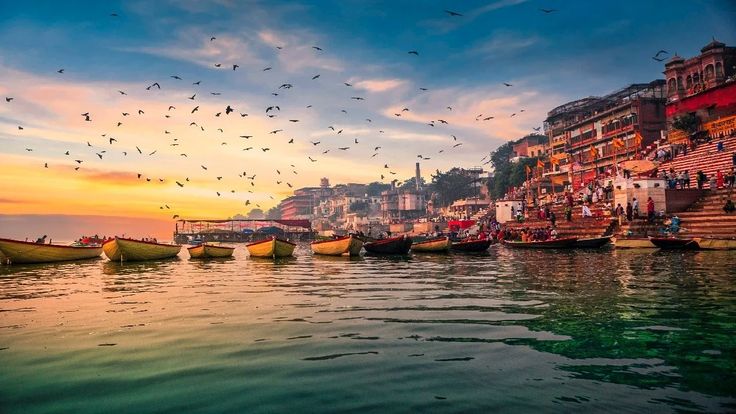
The evening Ganga Aarti at Dashashwamedh Ghat is held every day of the year at sunset. The winter months (November to February) are considered the best time to visit overall, and the Aarti during this season has the added magic of cool air, occasional mist on the river, and a particularly atmospheric orange dusk. The morning aarti around 5–6 AM is a quieter, more intimate alternative.
Is the water of the Ganges safe to touch or bathe in?
Is the water of the Ganges safe to touch or bathe in?
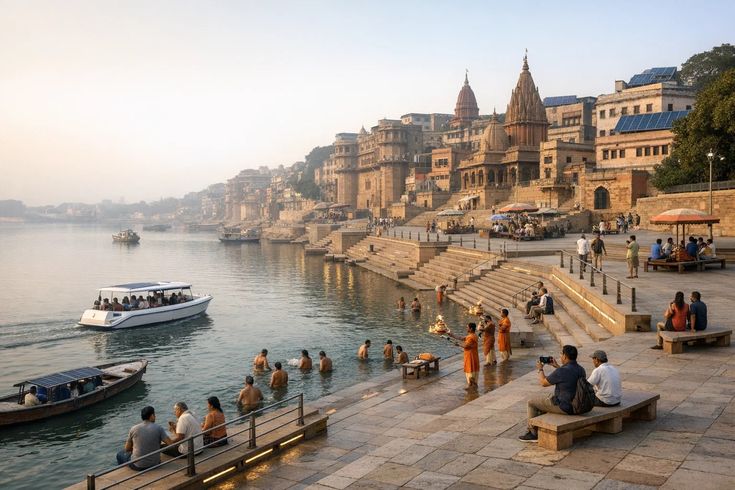
Millions of Hindu pilgrims bathe in the Ganges in Varanasi as a sacred act, and this tradition continues. From a Western public health perspective, however, the water quality in the urban stretch of the Ganges has been a concern due to industrial discharge and sewage. The Indian government's Namami Gange project has made efforts to improve water quality, but most travel health advisors recommend against bathing in the river or drinking its water without purification. Many travellers choose to participate symbolically touching the water and offering a flower without full immersion.
How do I get from the railway station to the ghats?
How do I get from the railway station to the ghats?
From Varanasi Junction (Cantt Station), the most reliable option is a prepaid auto-rickshaw from the booth inside the station, which should cost approximately ₹80–₹120 to Godaulia (the main junction near Dashashwamedh Ghat). From Godaulia, you walk the final 5–10 minutes to the ghats. Cycle rickshaws are also available within the old city. Ola and Uber operate in Varanasi and can be booked on your smartphone; they drop you as close to the old city as vehicles are permitted.